MoJA is built around the private collection of Maria Magdalena Kwiatkiewicz. The collection includes contemporary Polish jewelry art, jewelry from the communist-era PRL period, and ethnographic objects brought from around the world. For the architects, the challenge was not simply to design elegant display cases, but to create a clear spatial system that presents jewelry as art object, personal artifact, cultural symbol, and document of travel.
The project was divided into two main sections. The first is an open entrance zone connected to a jewelry store featuring works by Polish artists, a temporary exhibition area, and a workshop space. The second is the main museum sequence, leading visitors through successive exhibition chapters: from world jewelry and contemporary Polish jewelry art to PRL-era jewelry displayed inside a restored K67 kiosk.
Entrance Zone: A Quiet Beginning to the Story
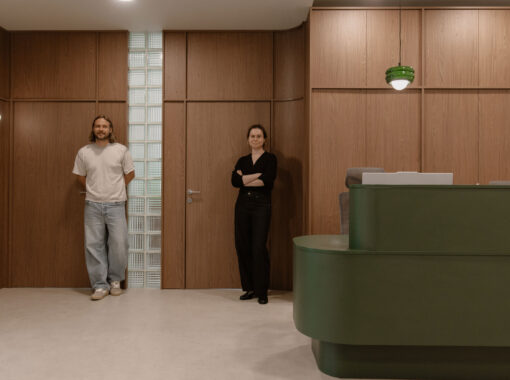
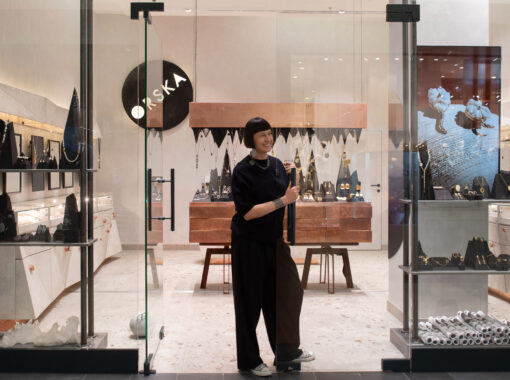
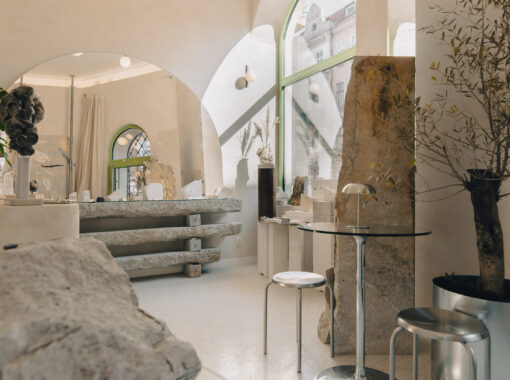
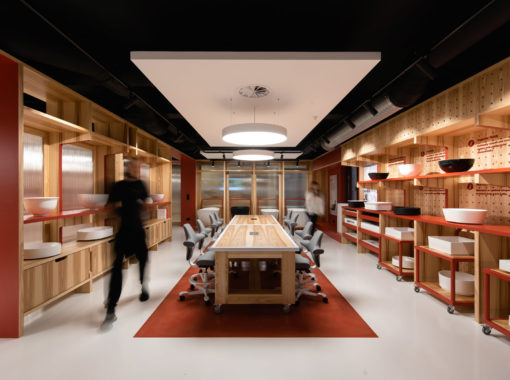
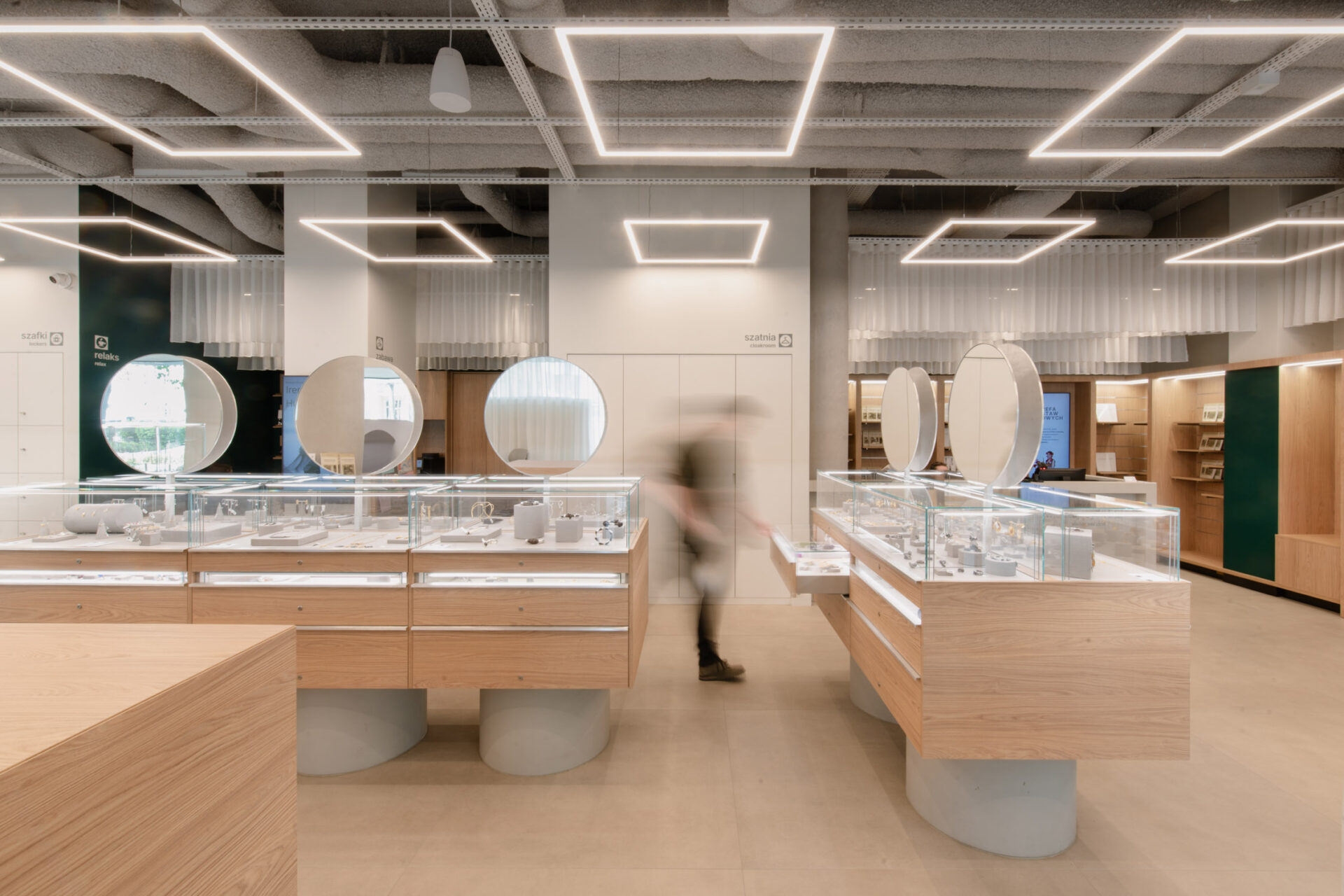
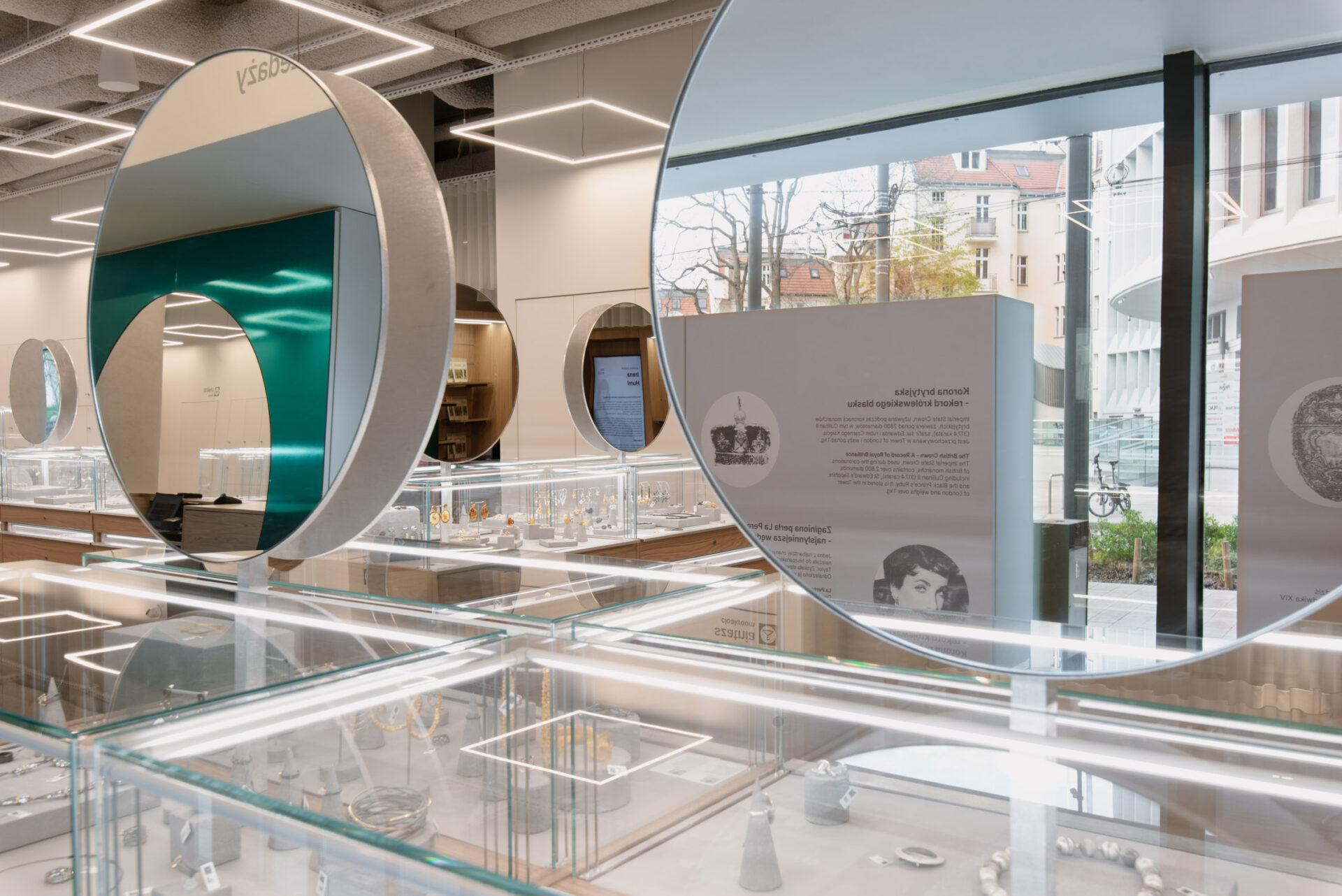
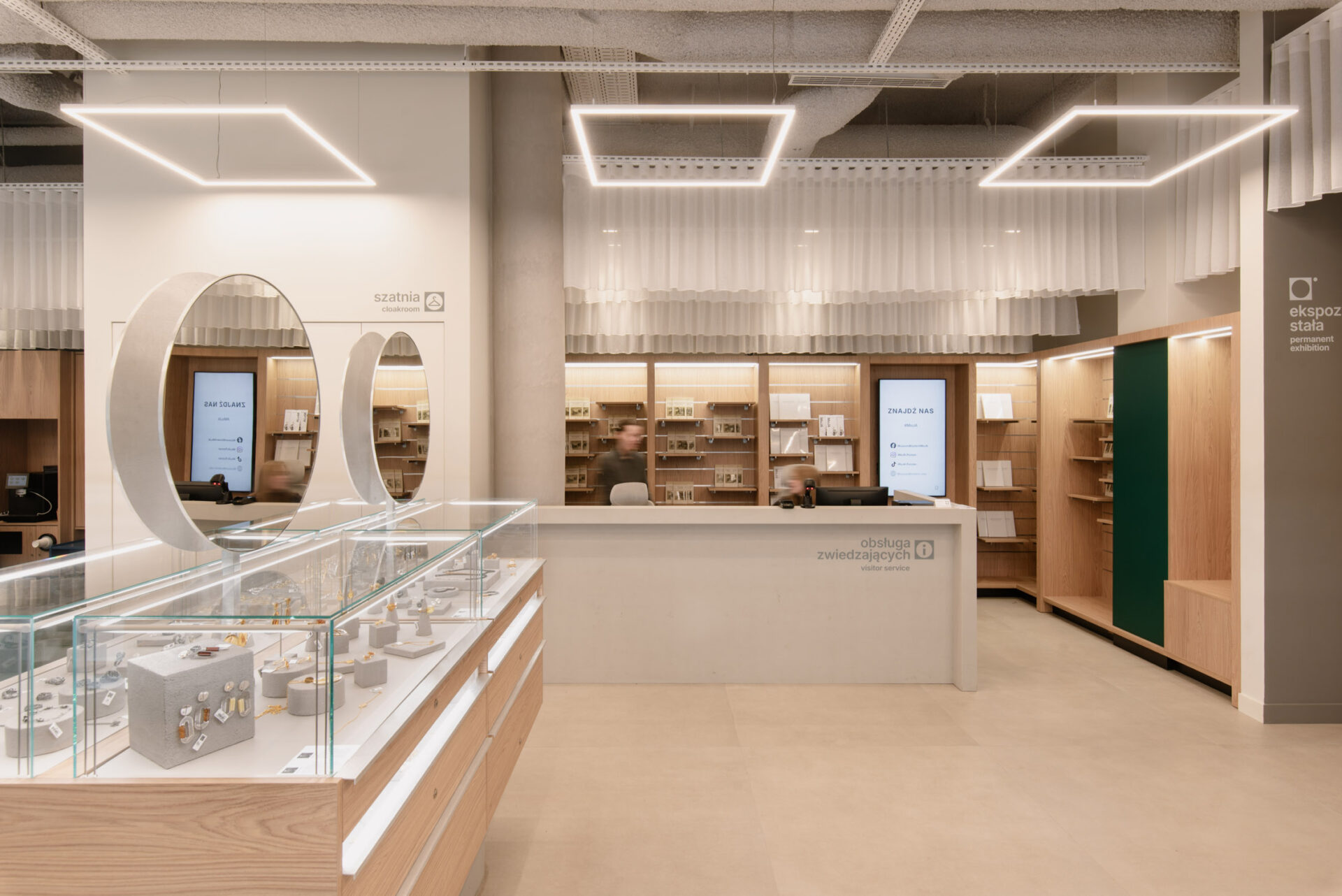
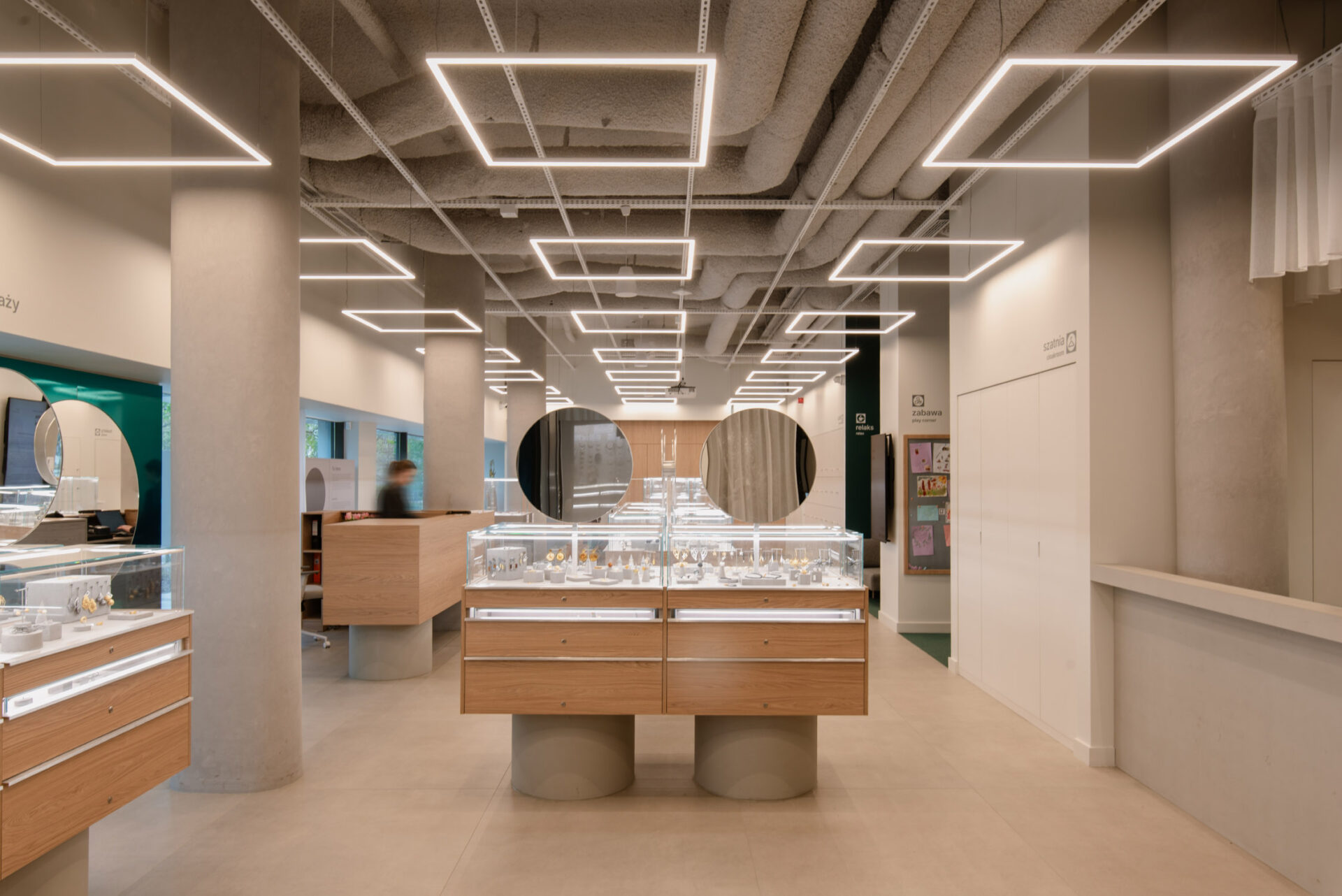
The first part of the museum is intentionally restrained. It acts as a transitional space between the city and the exhibition, between everyday contact with jewelry and its museum interpretation. Wooden display cases, light surfaces, circular mirrors, and soft linear lighting create a calm, gallery-like atmosphere. The interior does not compete with the objects, but frames them with subtle elegance.
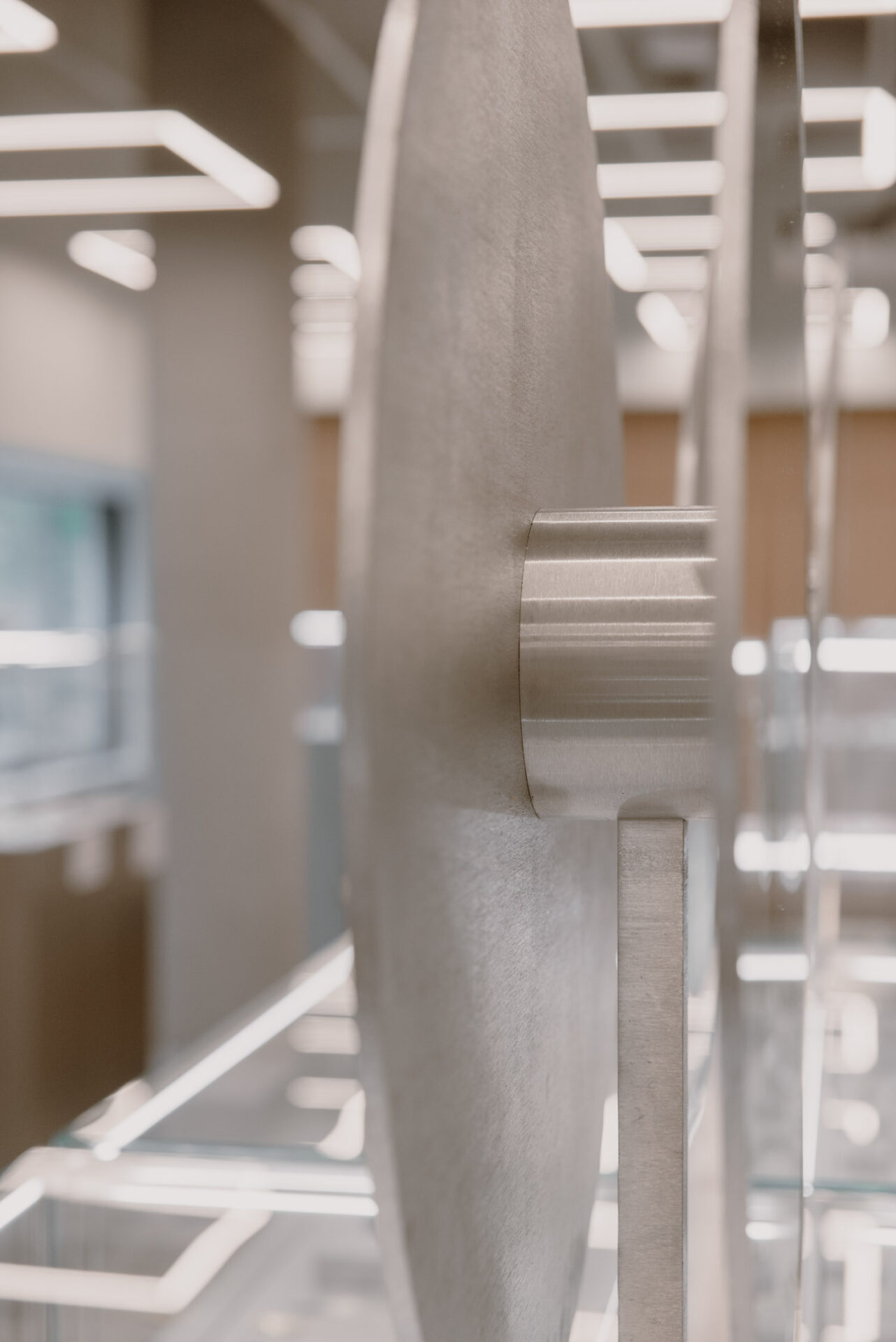
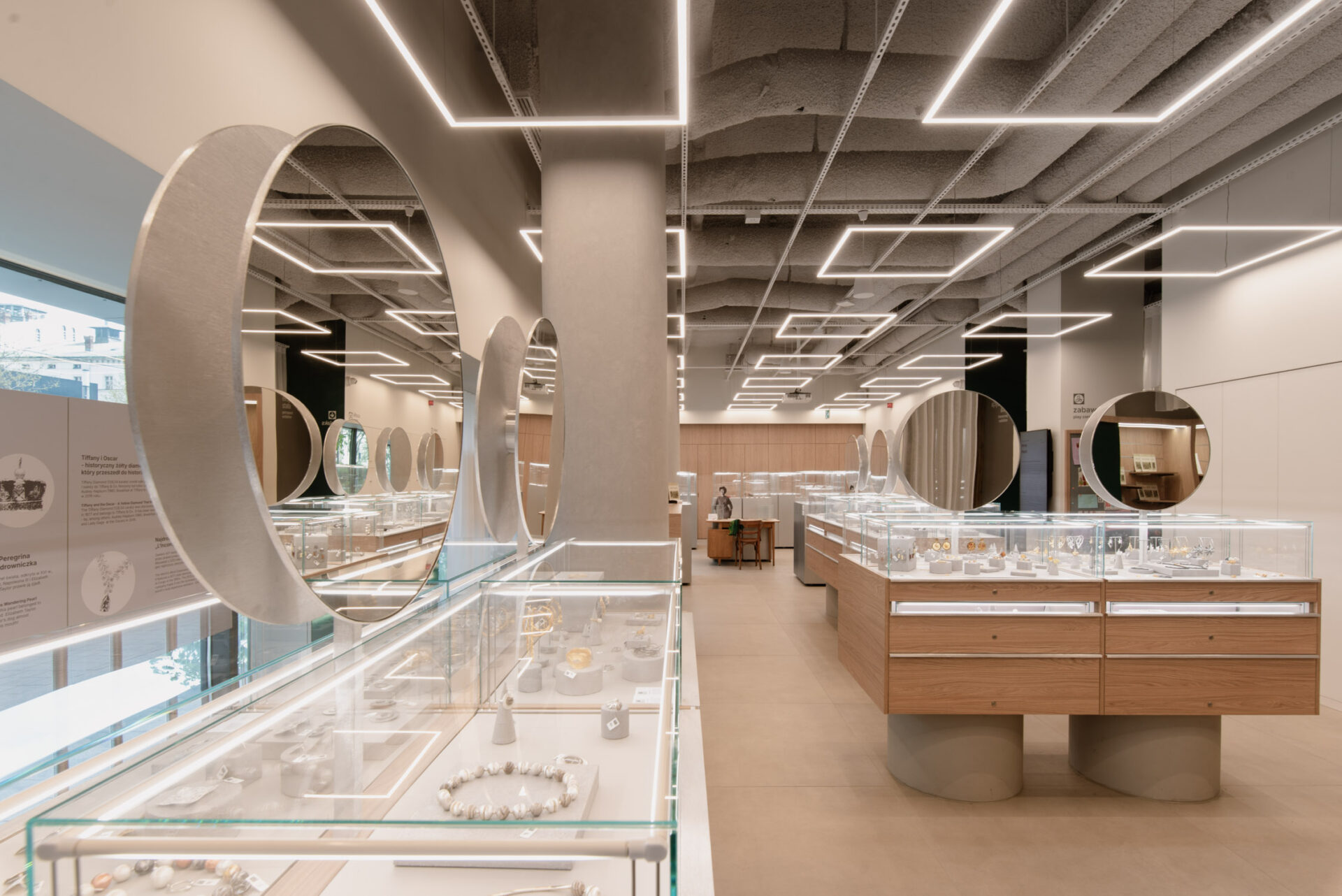
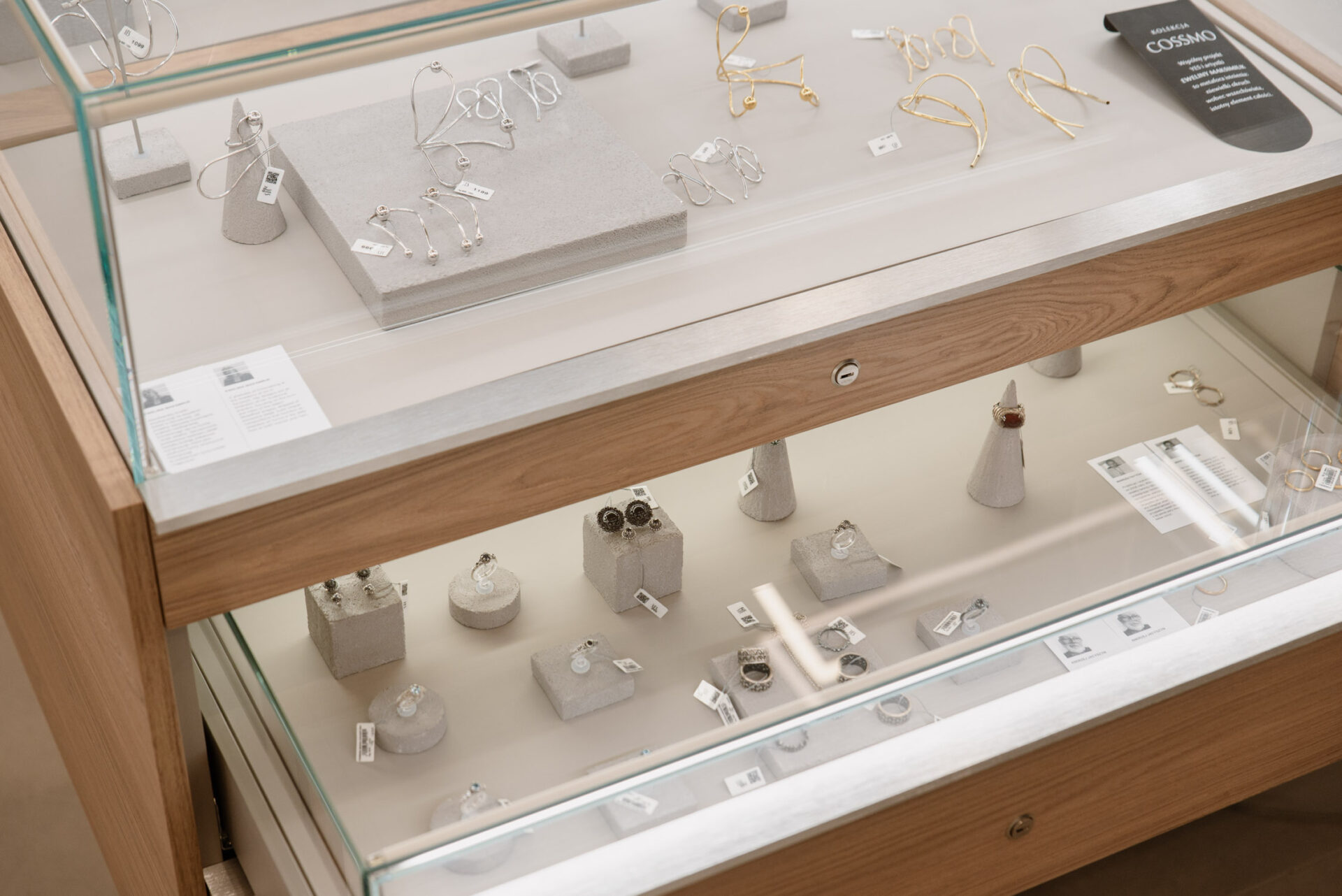
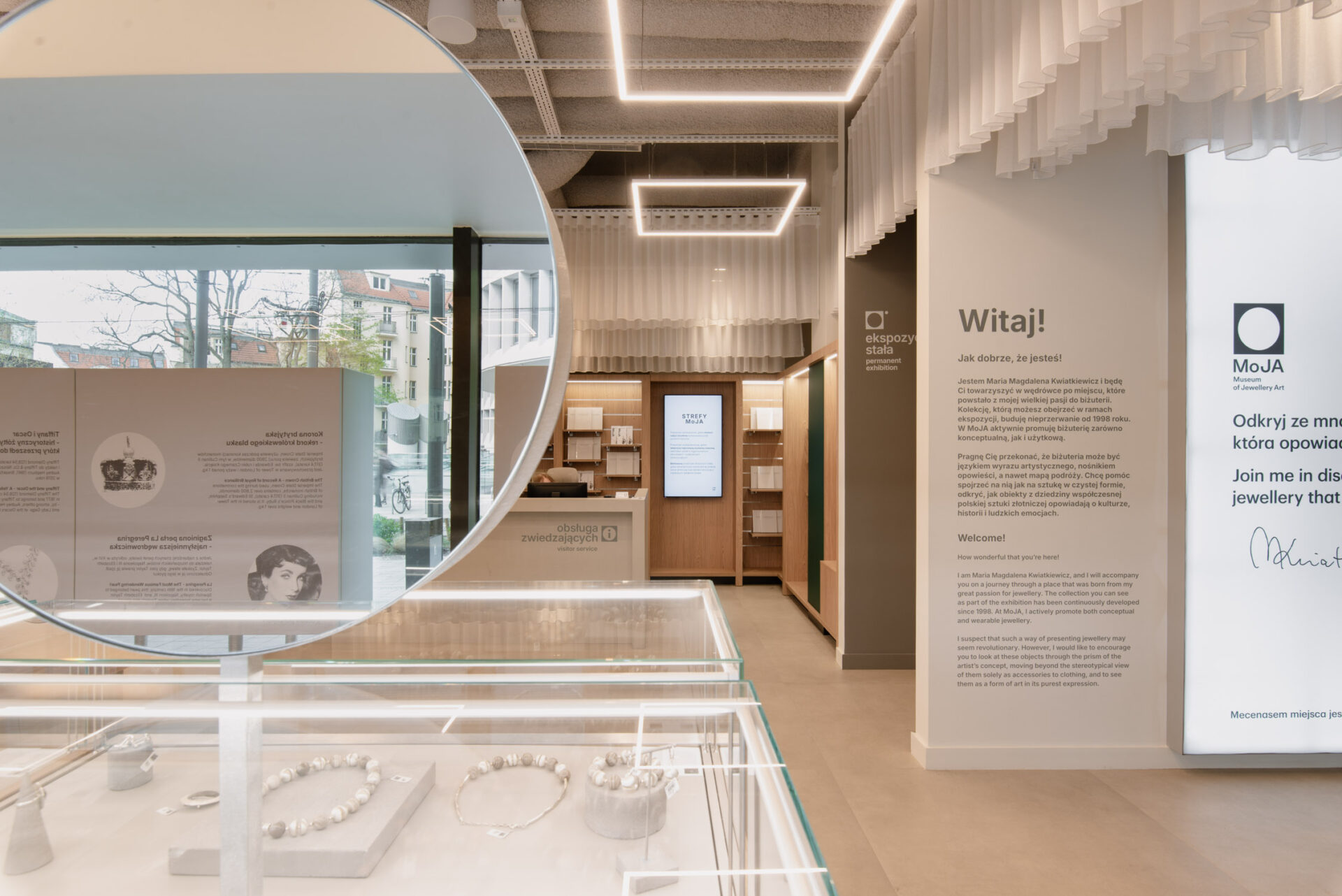
This area allows visitors to purchase jewelry by Polish artists, explore temporary exhibitions, or participate in workshops. Mobile steel-finished display structures make it possible to reconfigure the space for different events and functions. This flexibility was essential, as MoJA was never intended to be a static museum “to observe from behind glass.” Instead, it was designed as a living place for meetings, conversations, education, and material experimentation.
Soft curtains, wood, and bright surfaces introduce a more domestic and accessible character. There is no monumental institutional gesture here. Instead, the space offers an invitation: to enter, pause, observe, and become familiar with the subject.
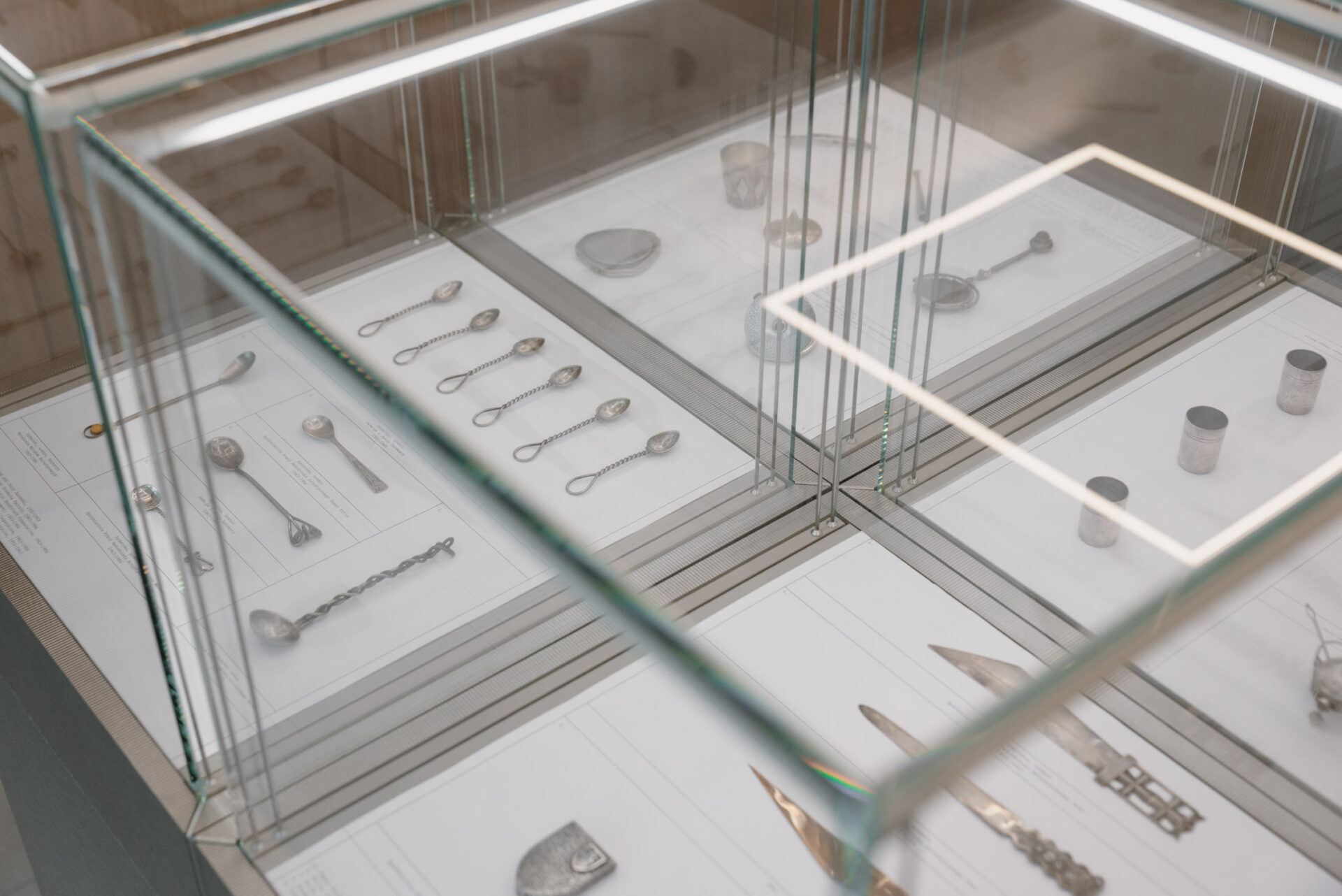
The Museum as a Sequence of Worlds. After crossing into the exhibition area, the language of the interior changes. Rather than creating one neutral hall filled with repetitive showcases, the architects designed a sequence of distinct worlds, each with its own atmosphere, materials, and rhythm.
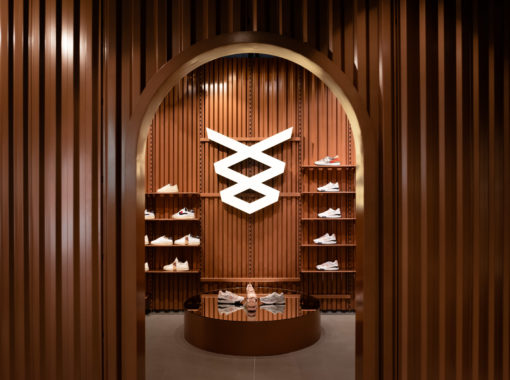
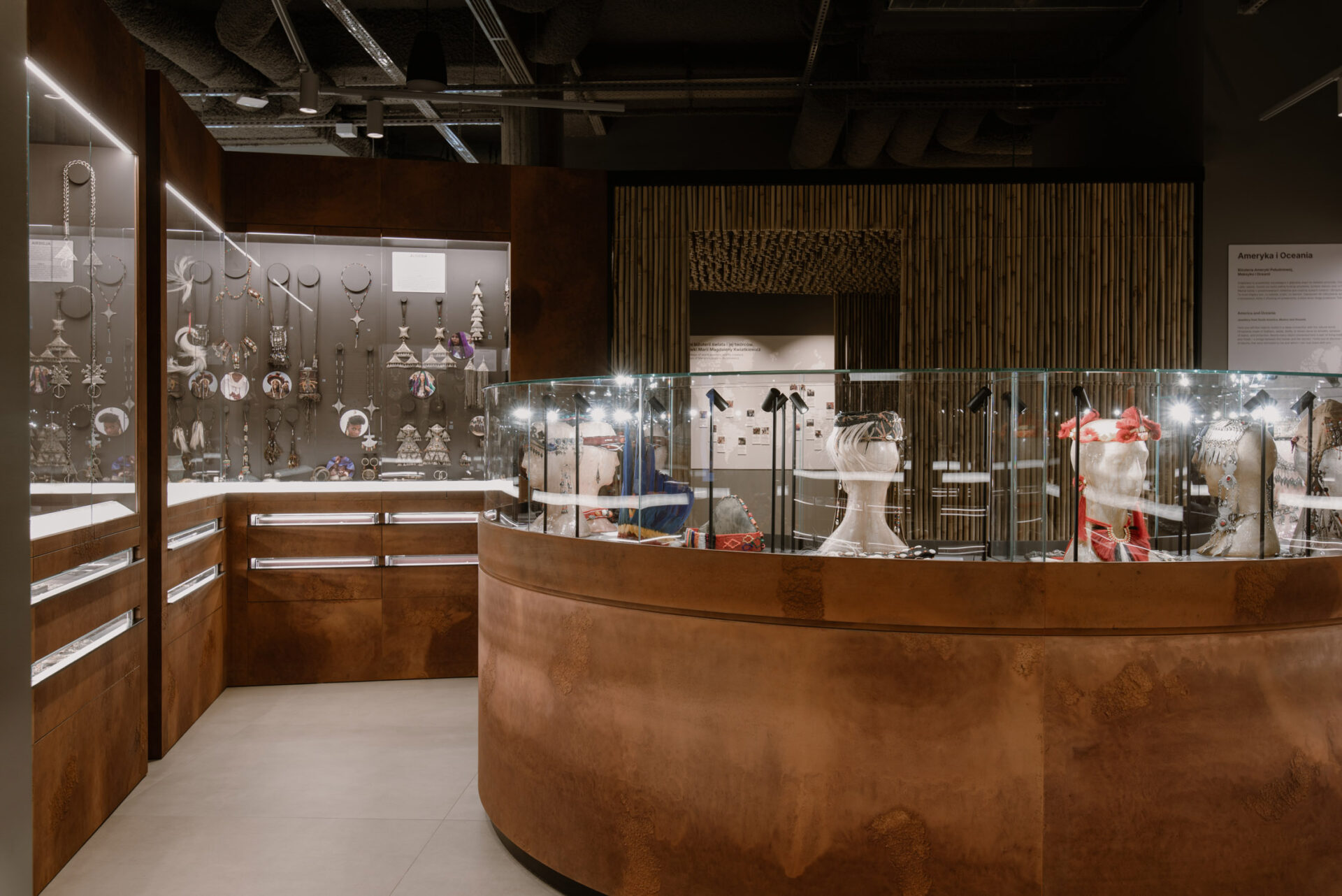
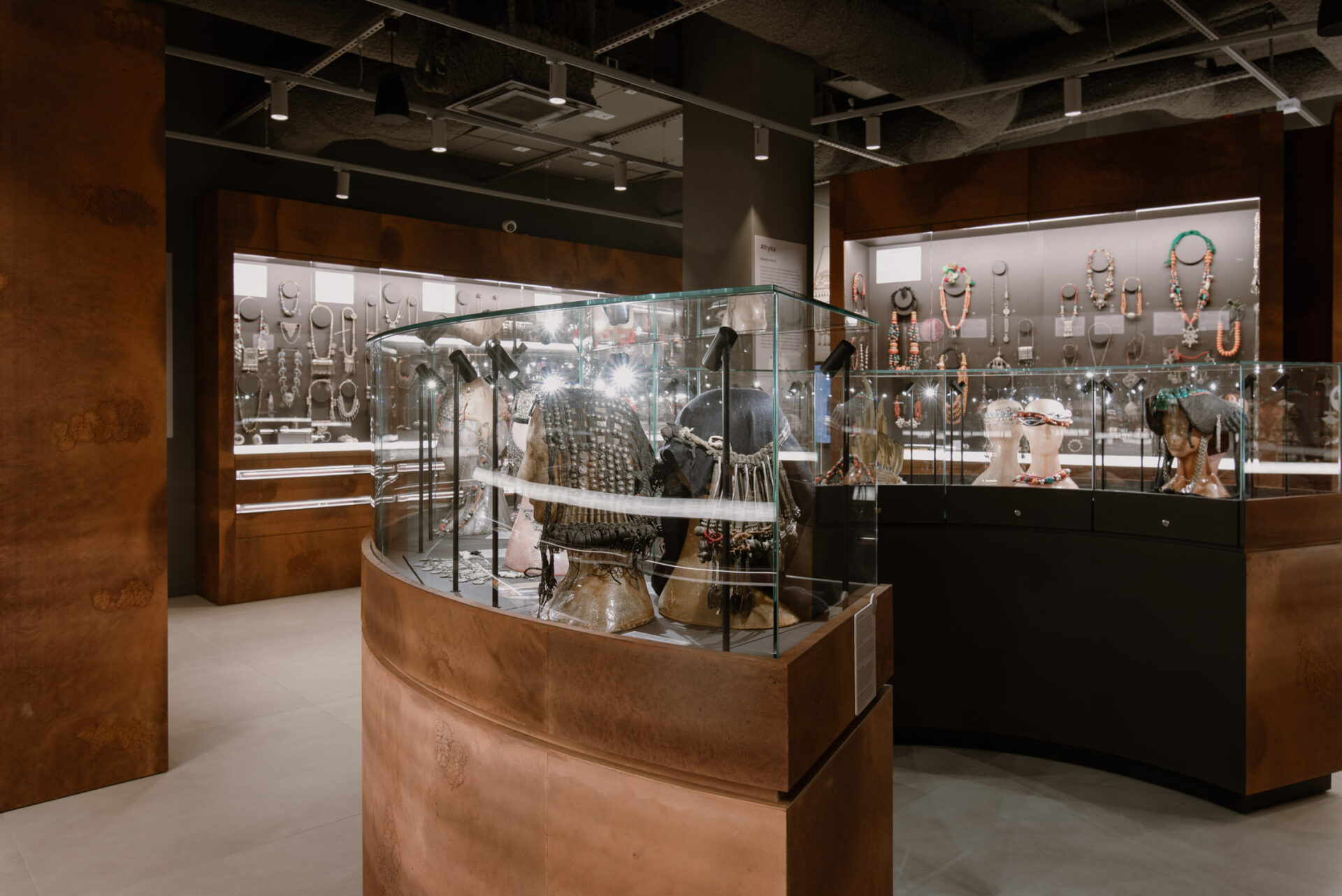
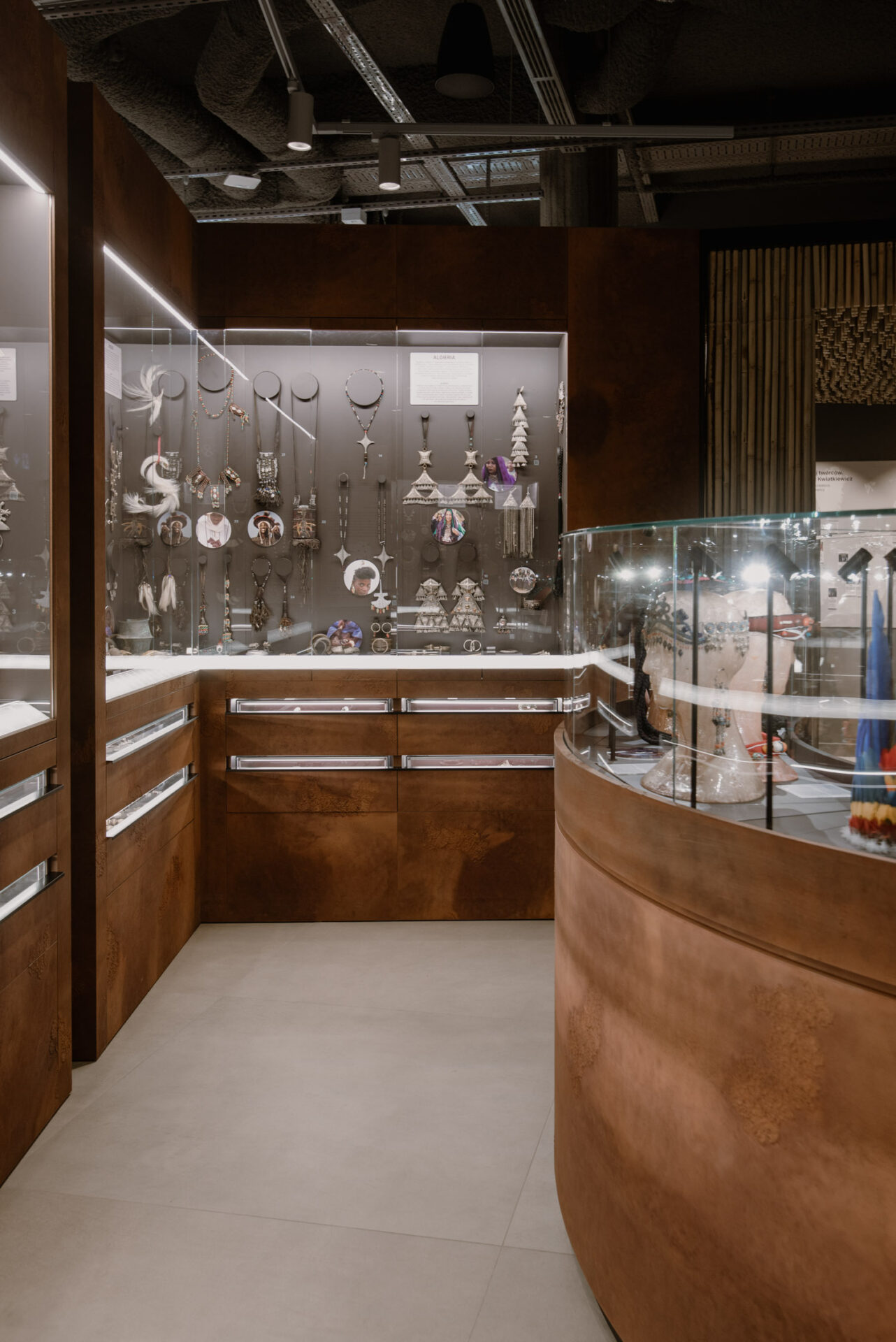
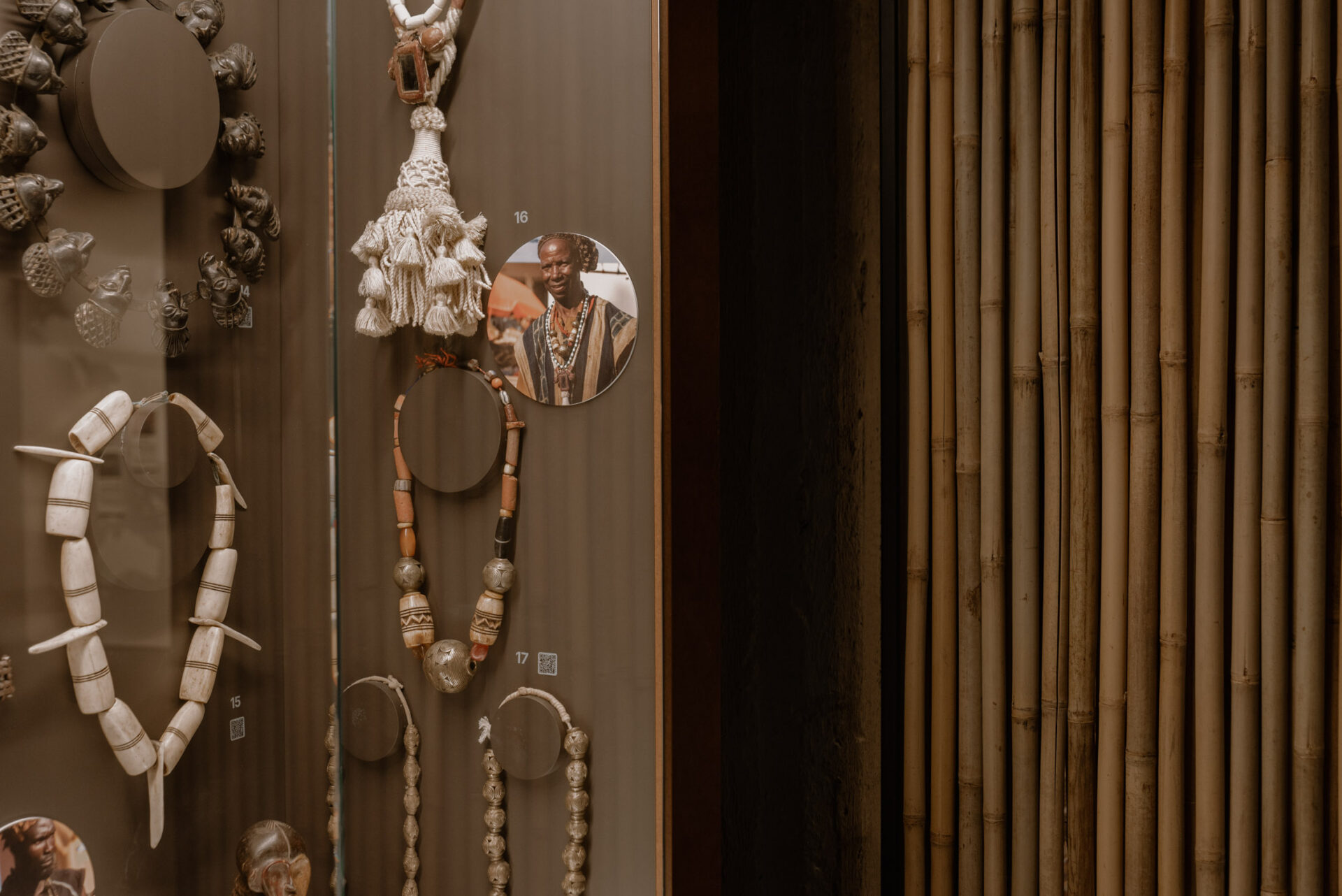
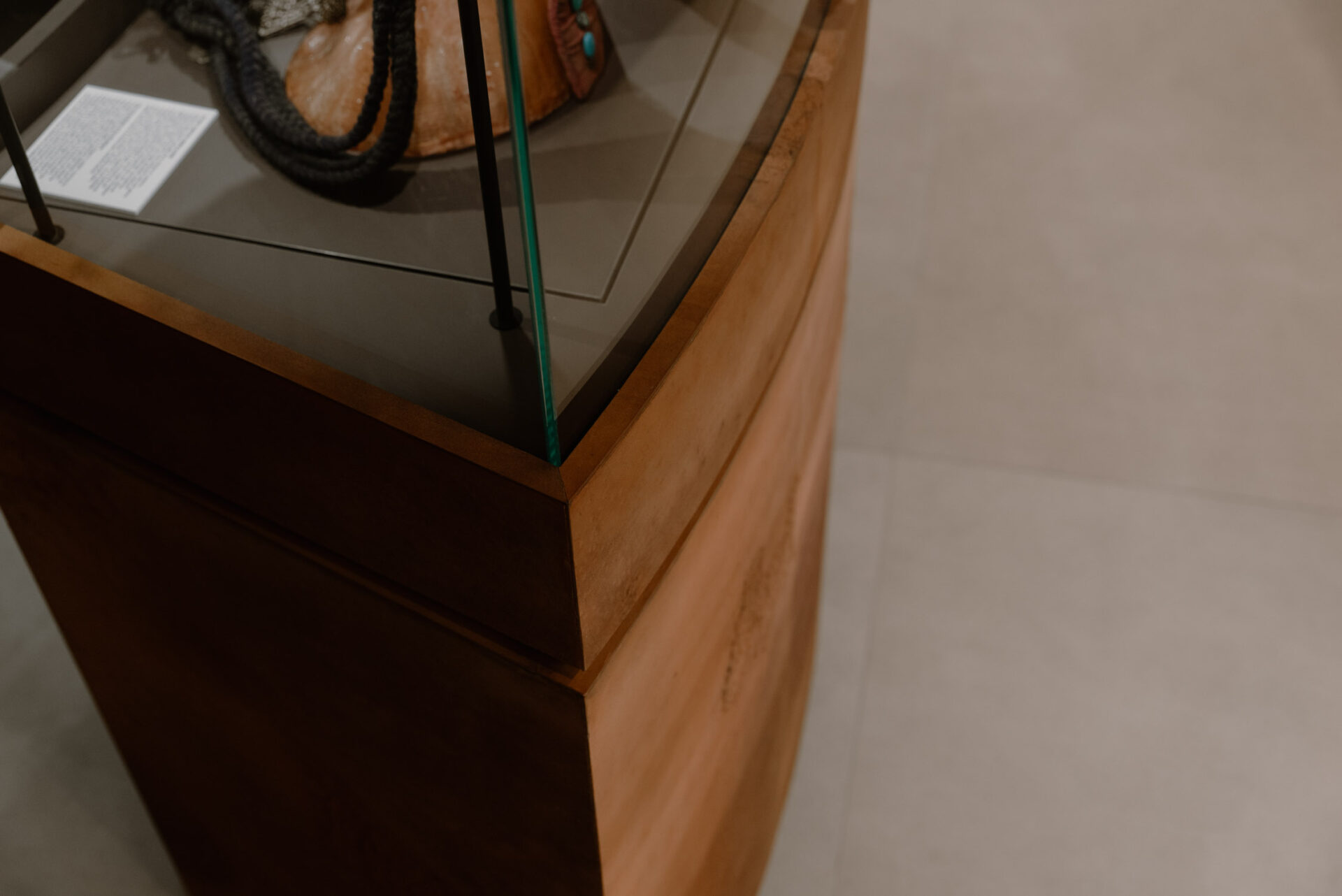
The first of these is the ethnographic section. It tells the story of jewelry from different continents, often connected to ritual, identity, status, community, and the body. Here, the interior takes on warmer, earthier tones. Display cases finished in corten-inspired materials evoke weight, durability, and traces of time. At the center of this zone stands a semicircular showcase dedicated to ceremonial headpieces, functioning as an island around which visitors naturally slow down.
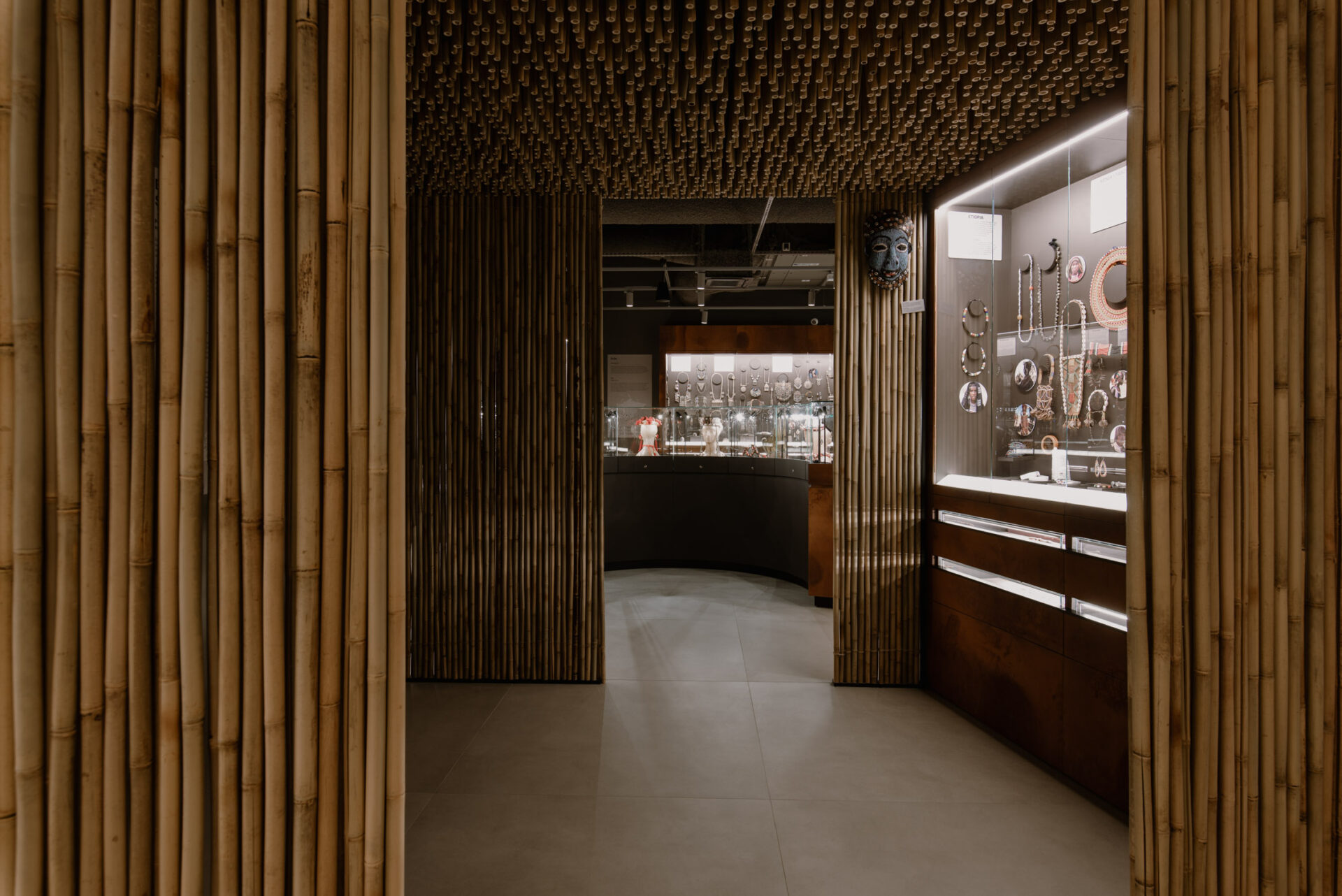
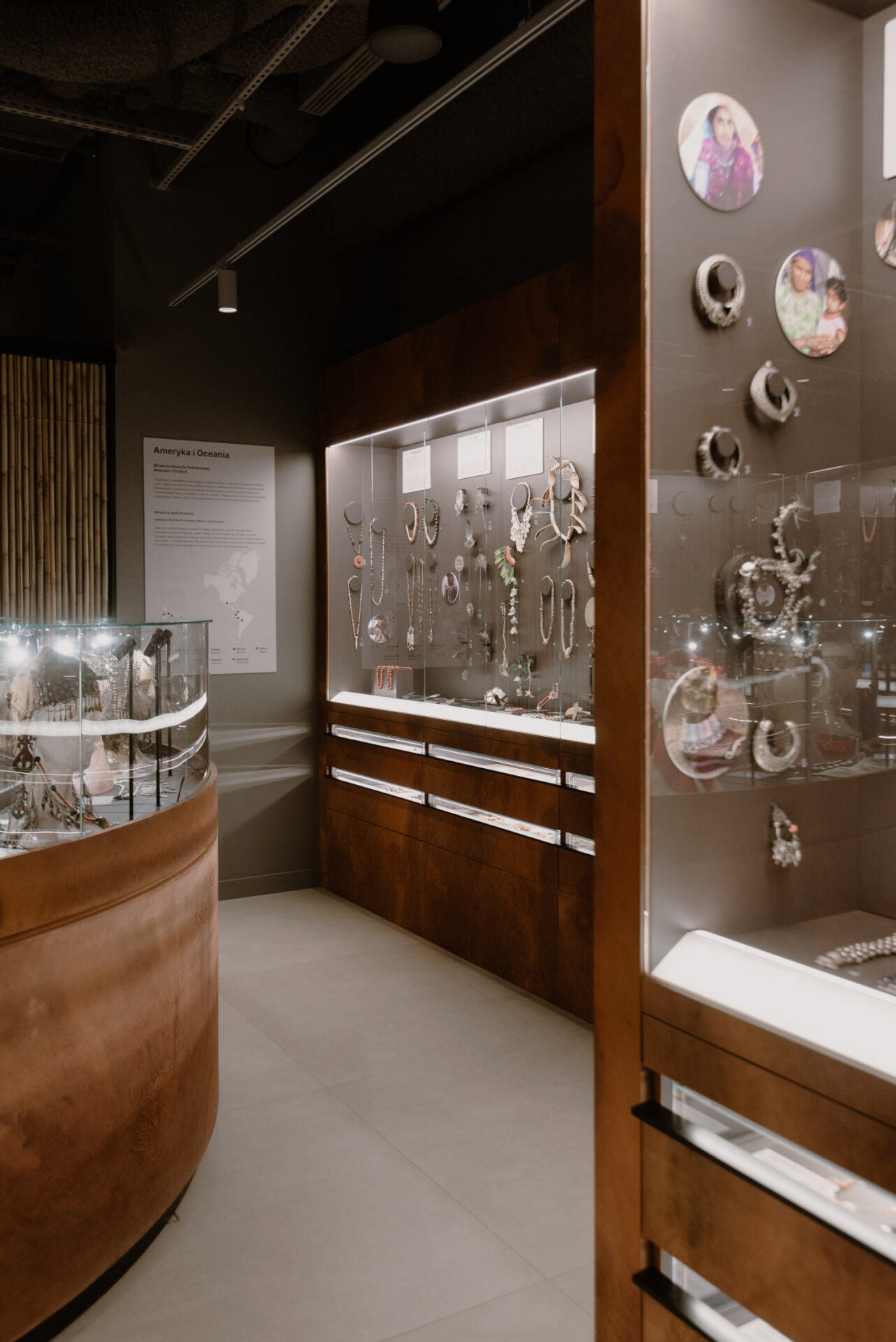
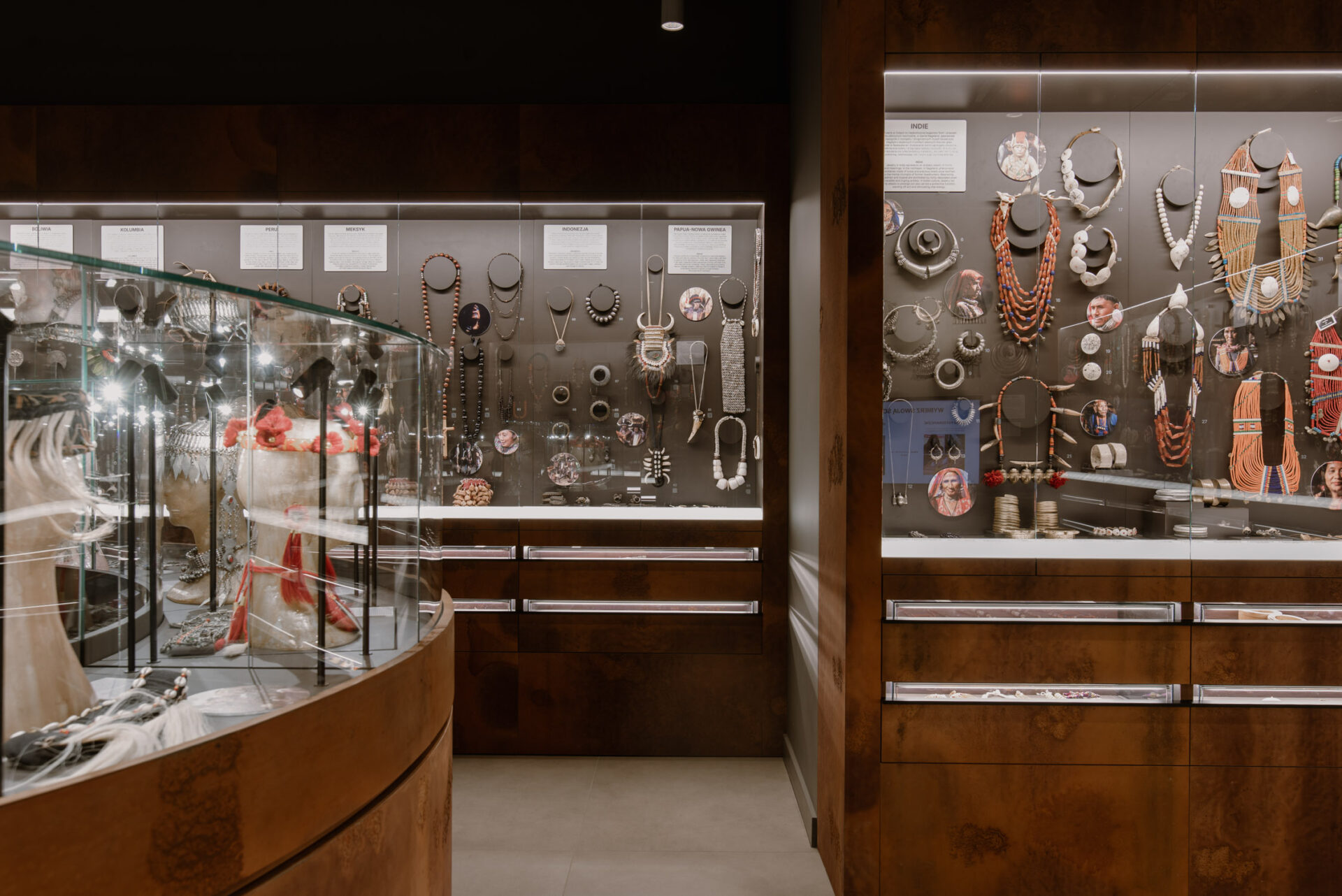
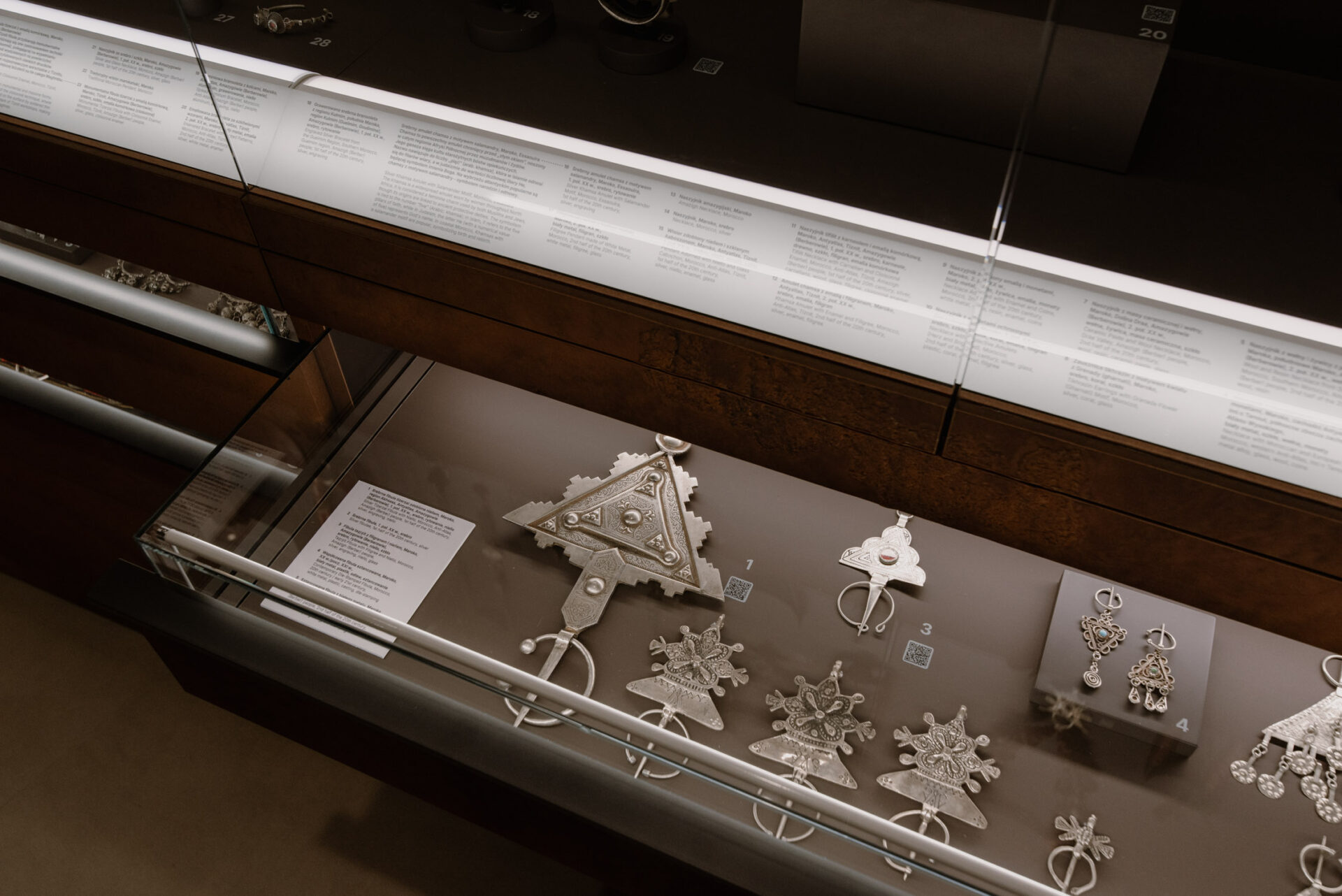
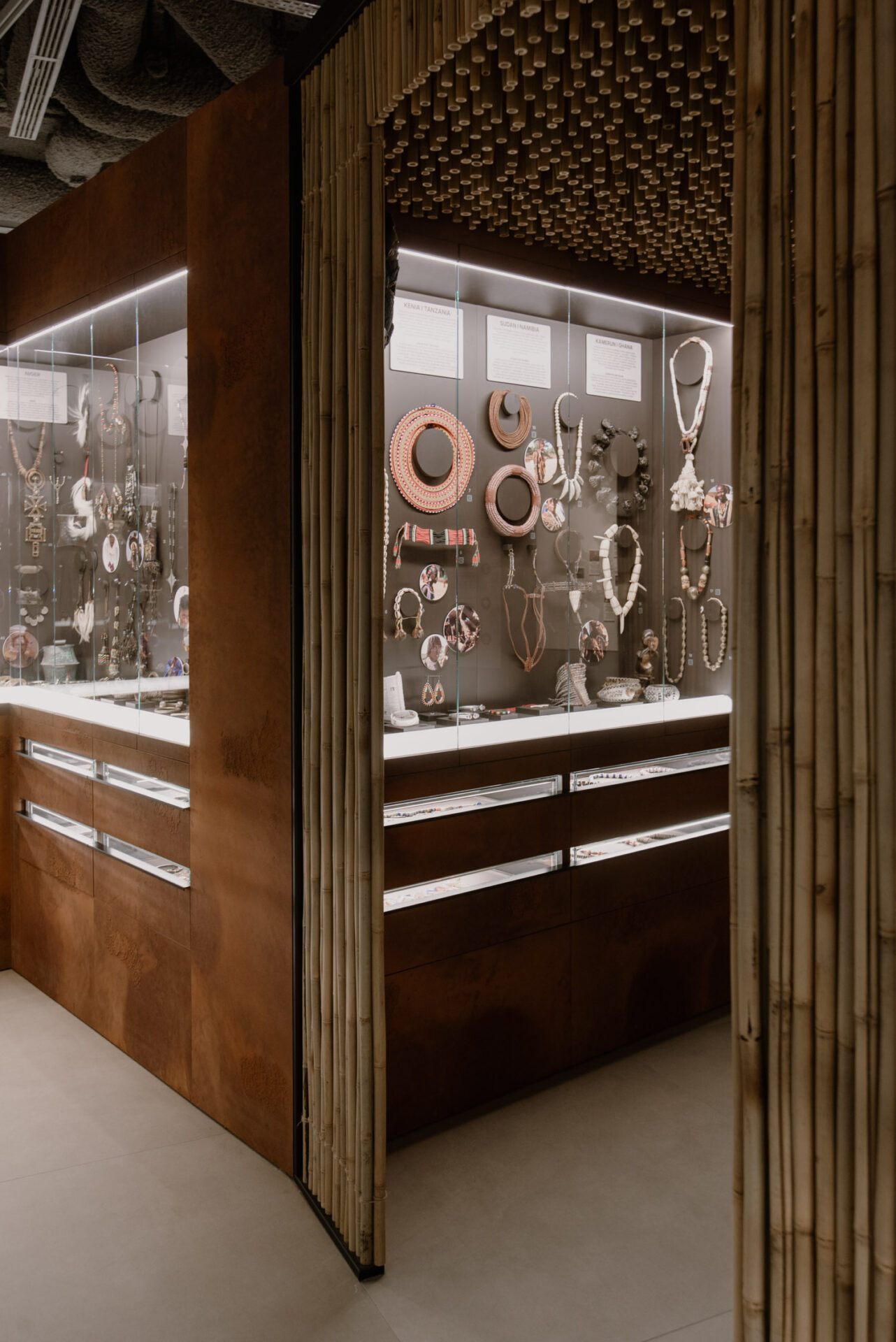
One of the most striking moments within this section is the bamboo cube installation. Its walls and ceiling create a spatial filter that subtly transforms perception rather than imitating theatrical scenography. Among glass showcases, cool lighting, and museum precision, the bamboo introduces an organic rhythm. It becomes an exhibition fragment experienced physically: narrowing circulation, framing views, and creating the sensation of entering another world.
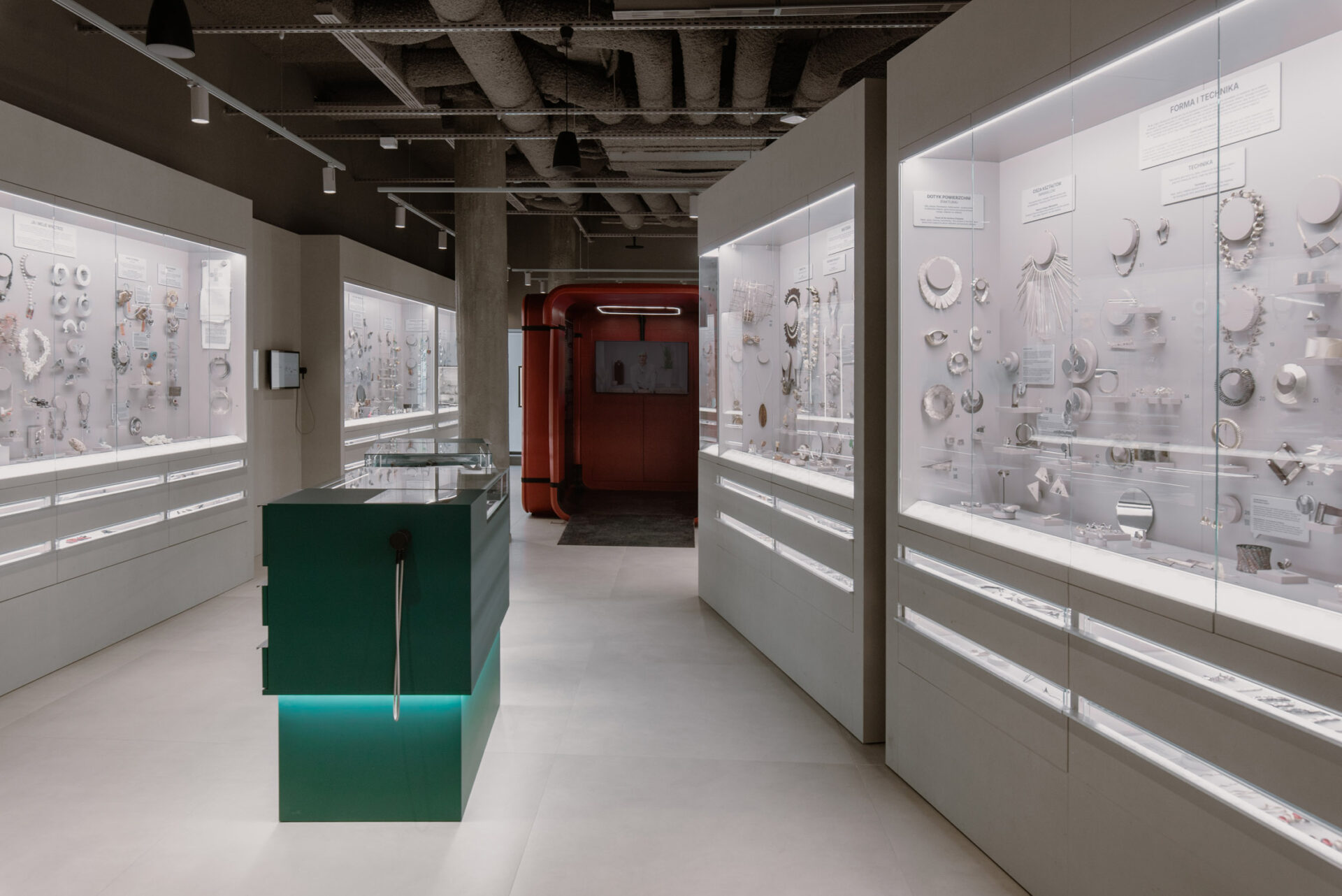
Contemporary Jewelry: Precision, Light, and Flexibility. The second exhibition section focuses on contemporary artistic jewelry. Here, the architecture becomes more technical and restrained. Gray showcases, neutral backgrounds, and carefully controlled lighting organize a large number of small yet highly diverse works. This demanded extraordinary design discipline: each object required intimacy, while the overall exhibition needed to remain legible.
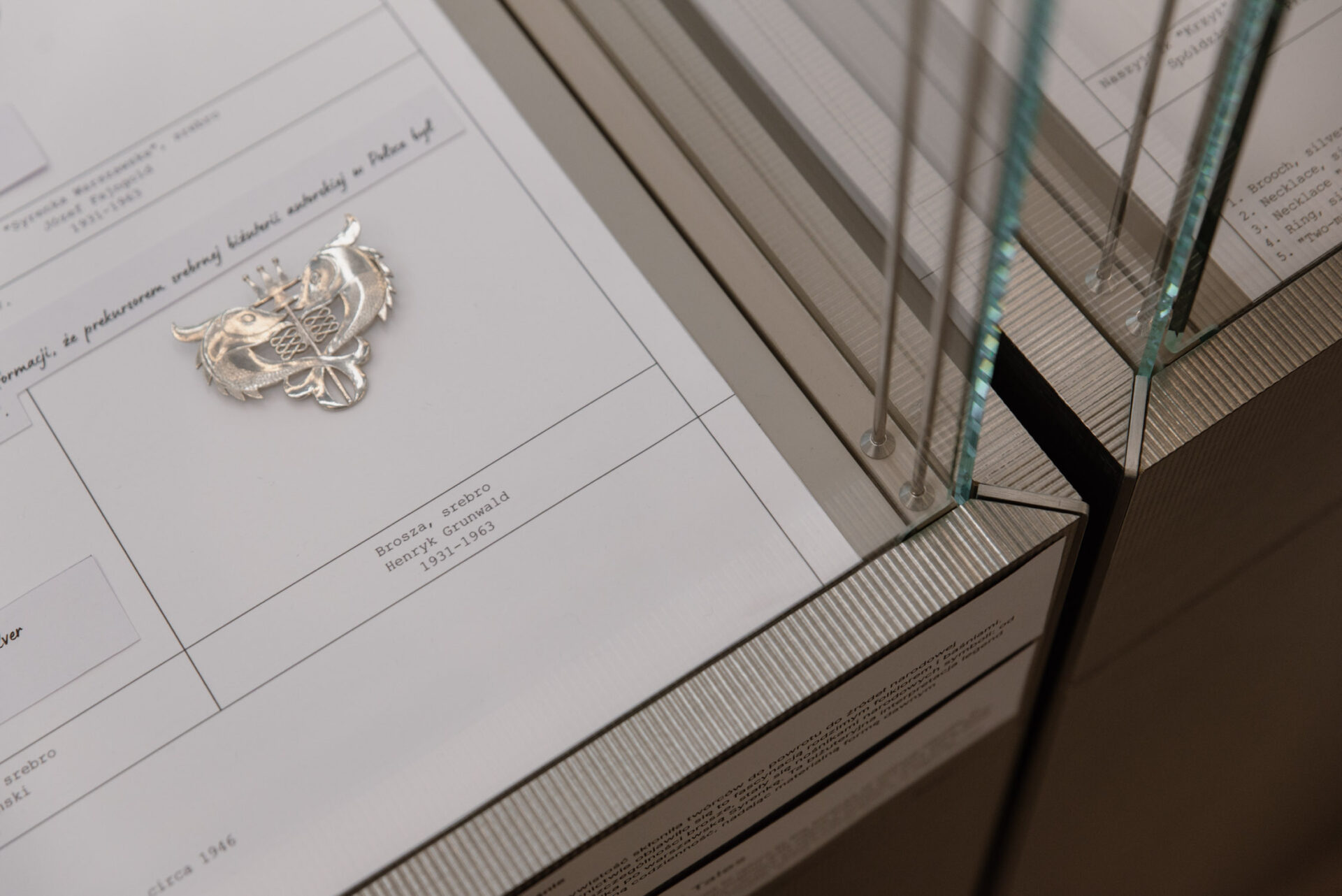
The showcases themselves were conceived not simply as display furniture, but as museum tools. Pull-out illuminated drawers reveal additional layers of the collection without overcrowding the main exhibition walls. Magnetic boards allow curators to rearrange displays, introduce new narratives, and modify the exhibition over time. As a result, the museum avoids locking the collection into a fixed structure and instead allows it to evolve.
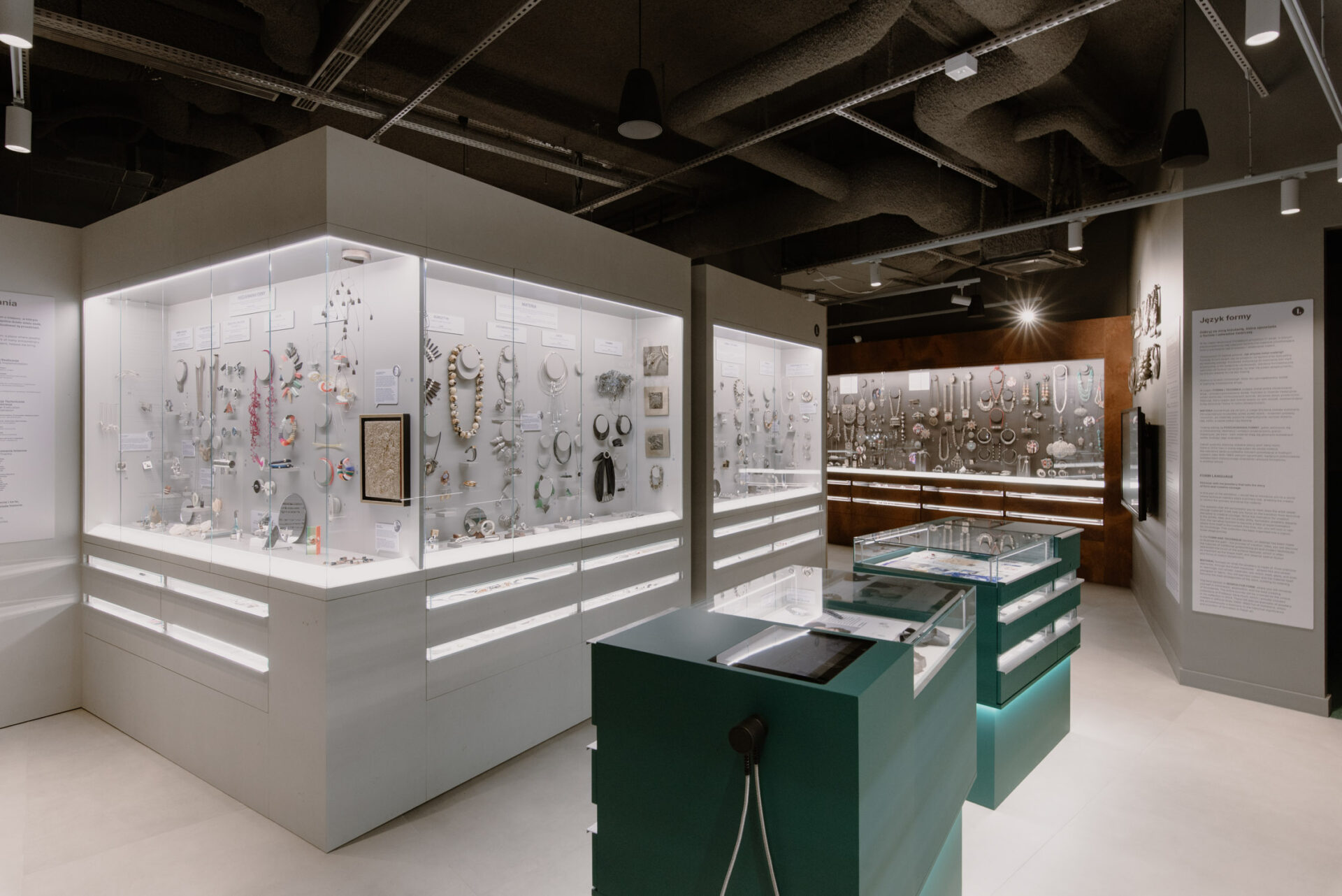
Light plays a critical role throughout this space. Jewelry made from silver, stone, glass, textiles, synthetic materials, and experimental media requires highly precise control of reflections and visibility.
Too much light would strip the objects of intimacy. Too little would conceal craftsmanship. At MoJA, lighting is not decorative – it is part of the viewing system itself.
K67: A Red Symbol of Memory
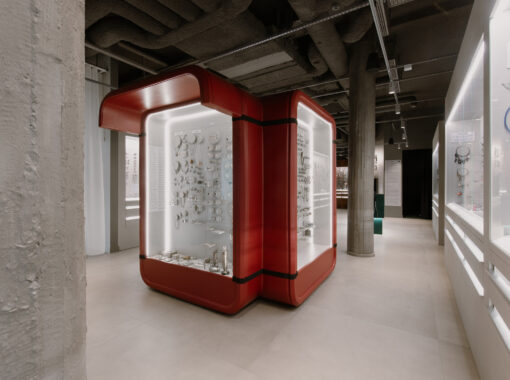
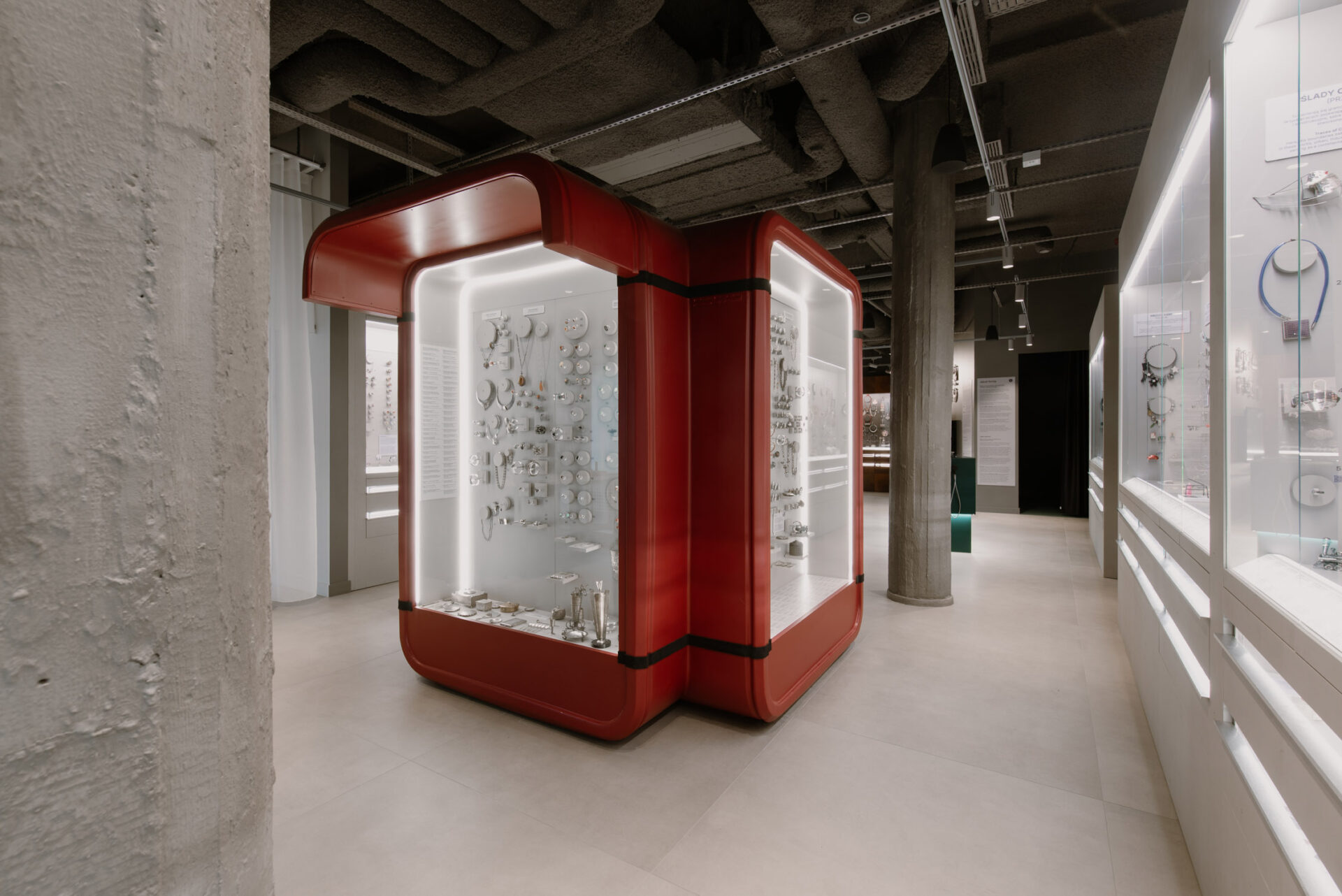
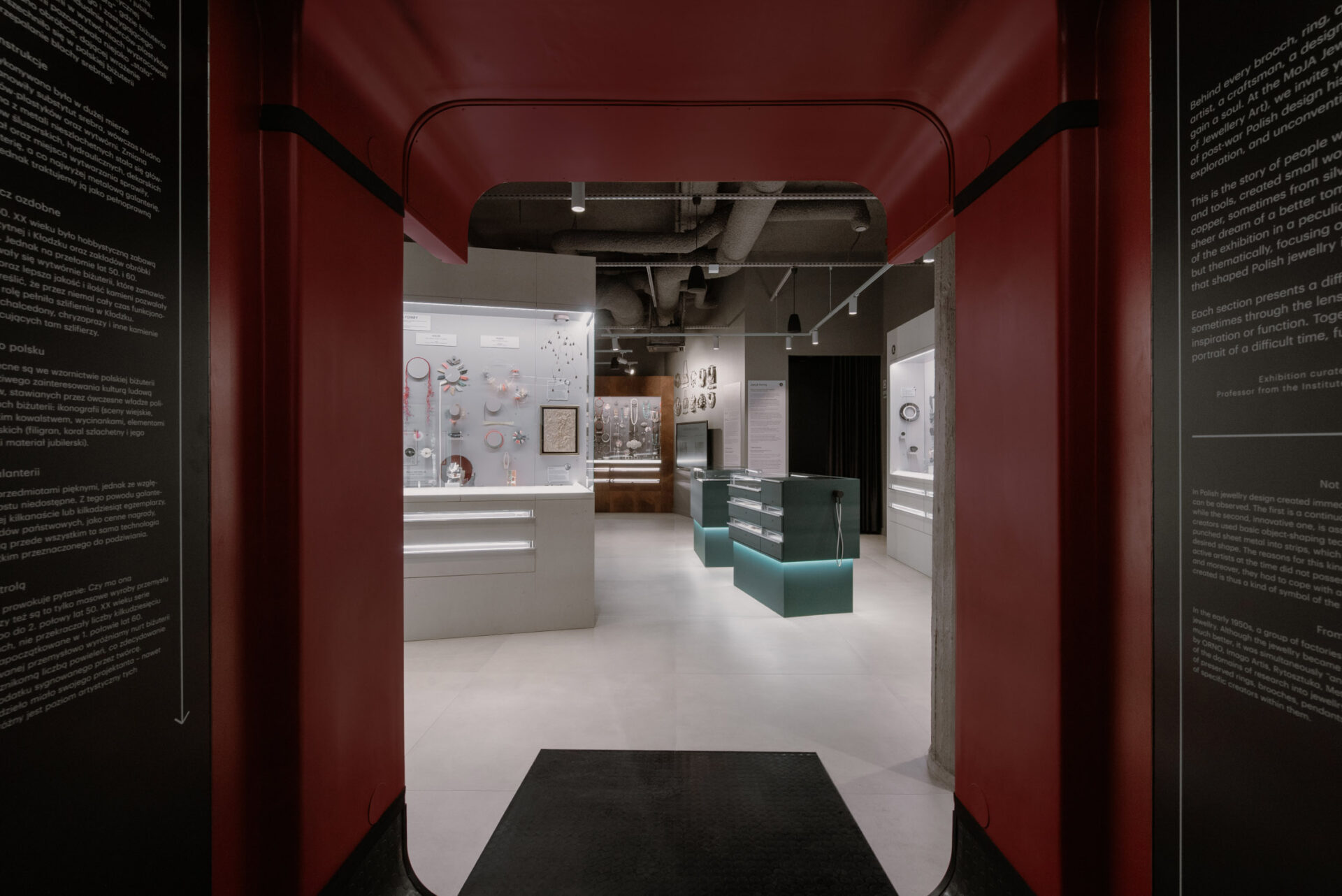
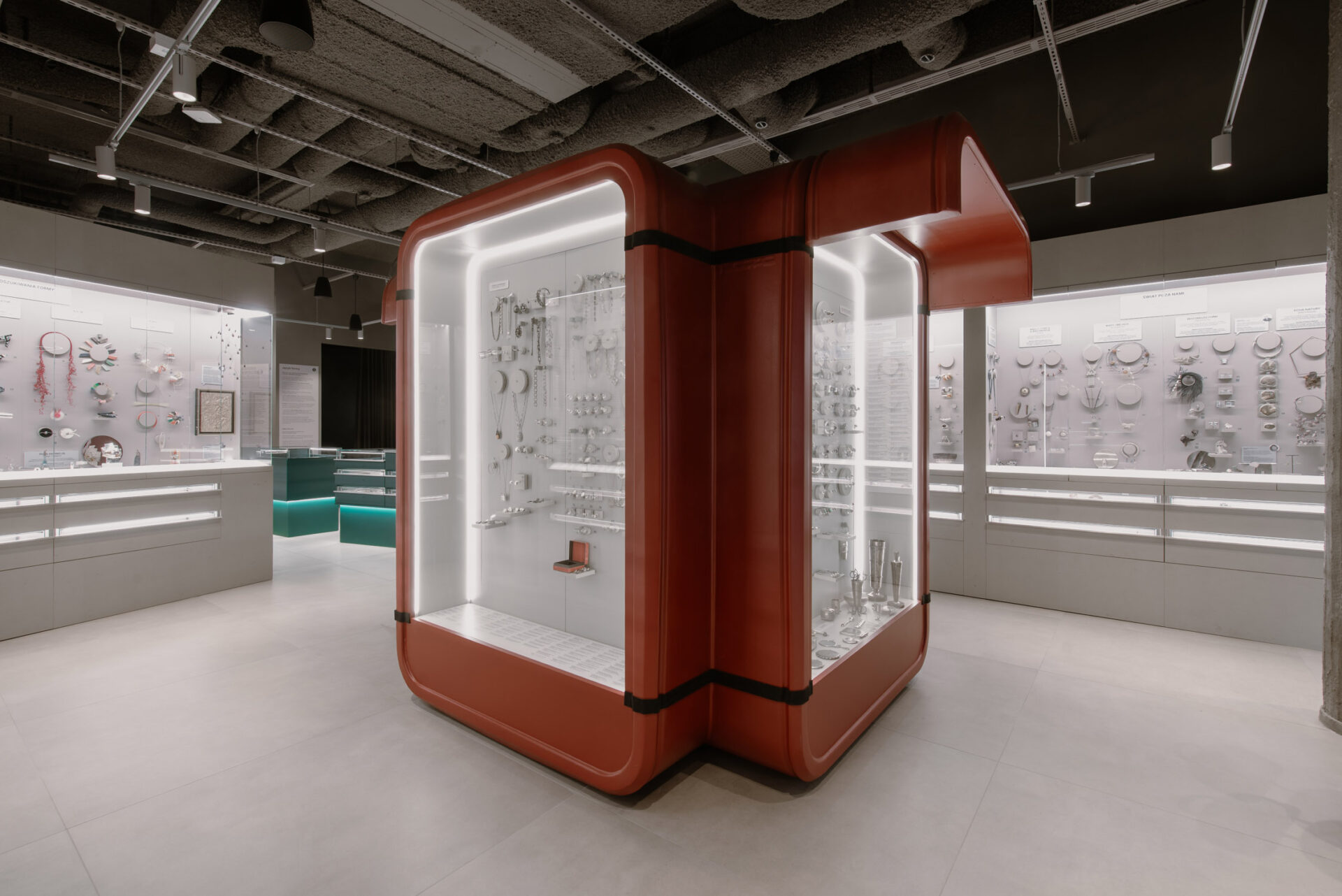
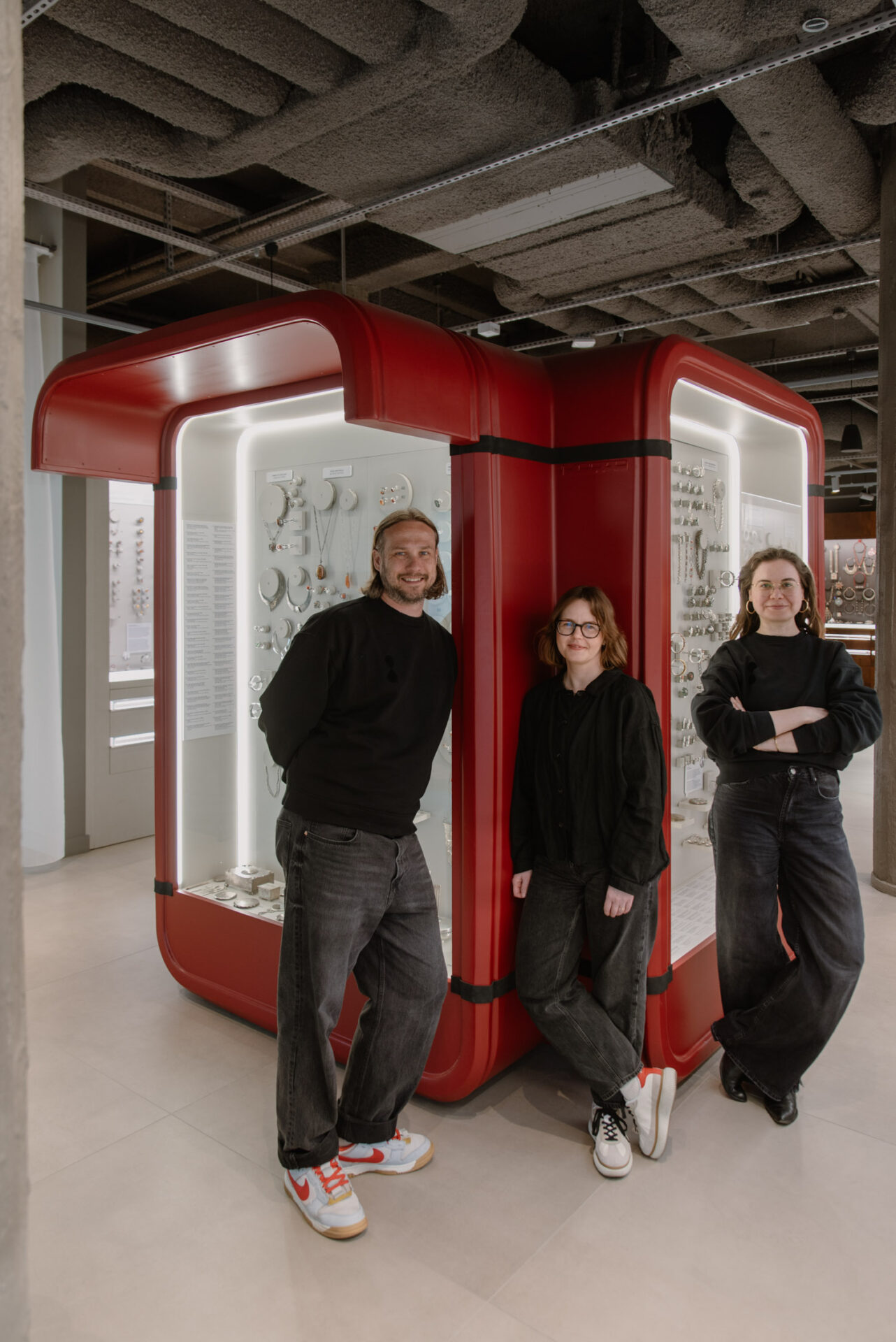
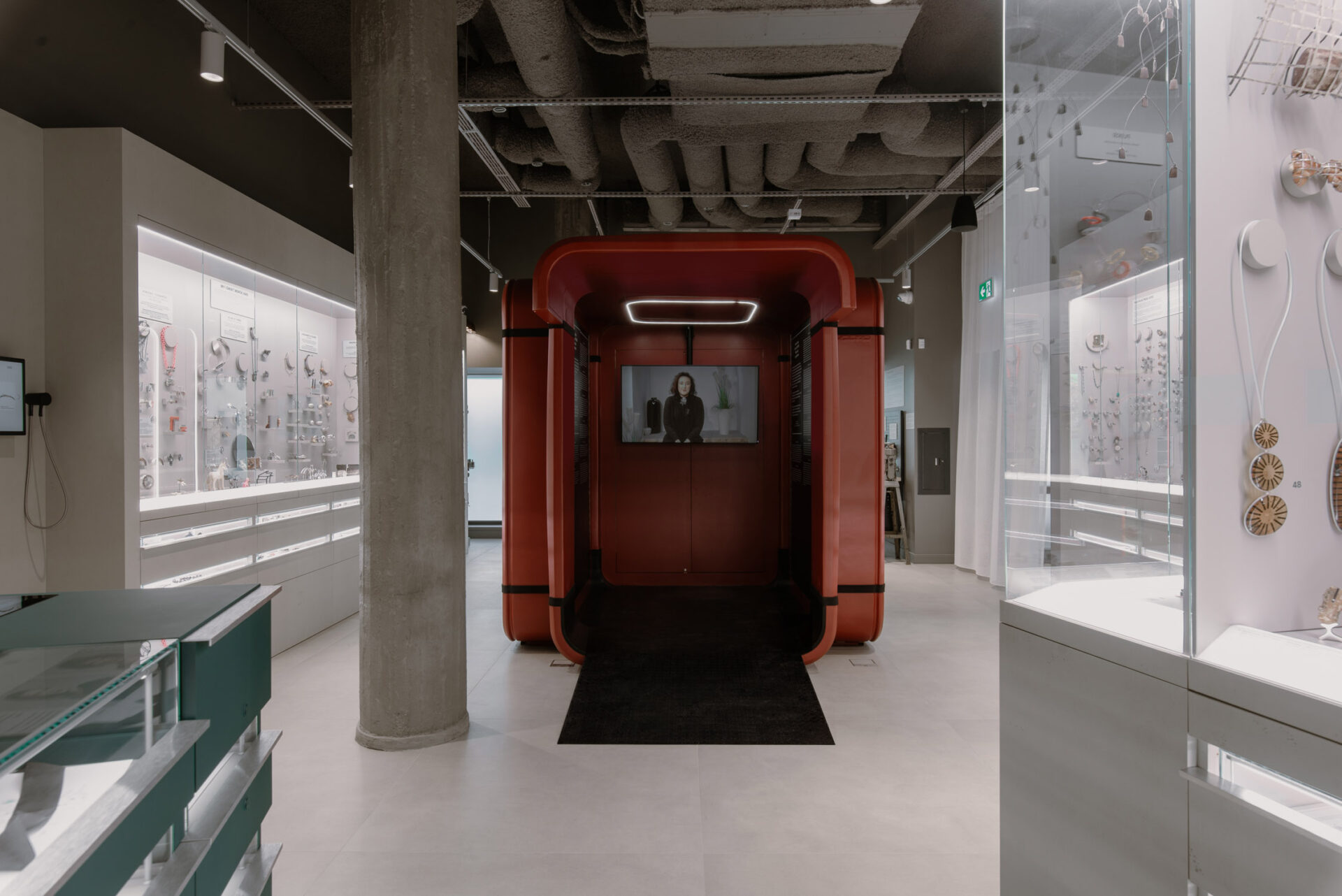
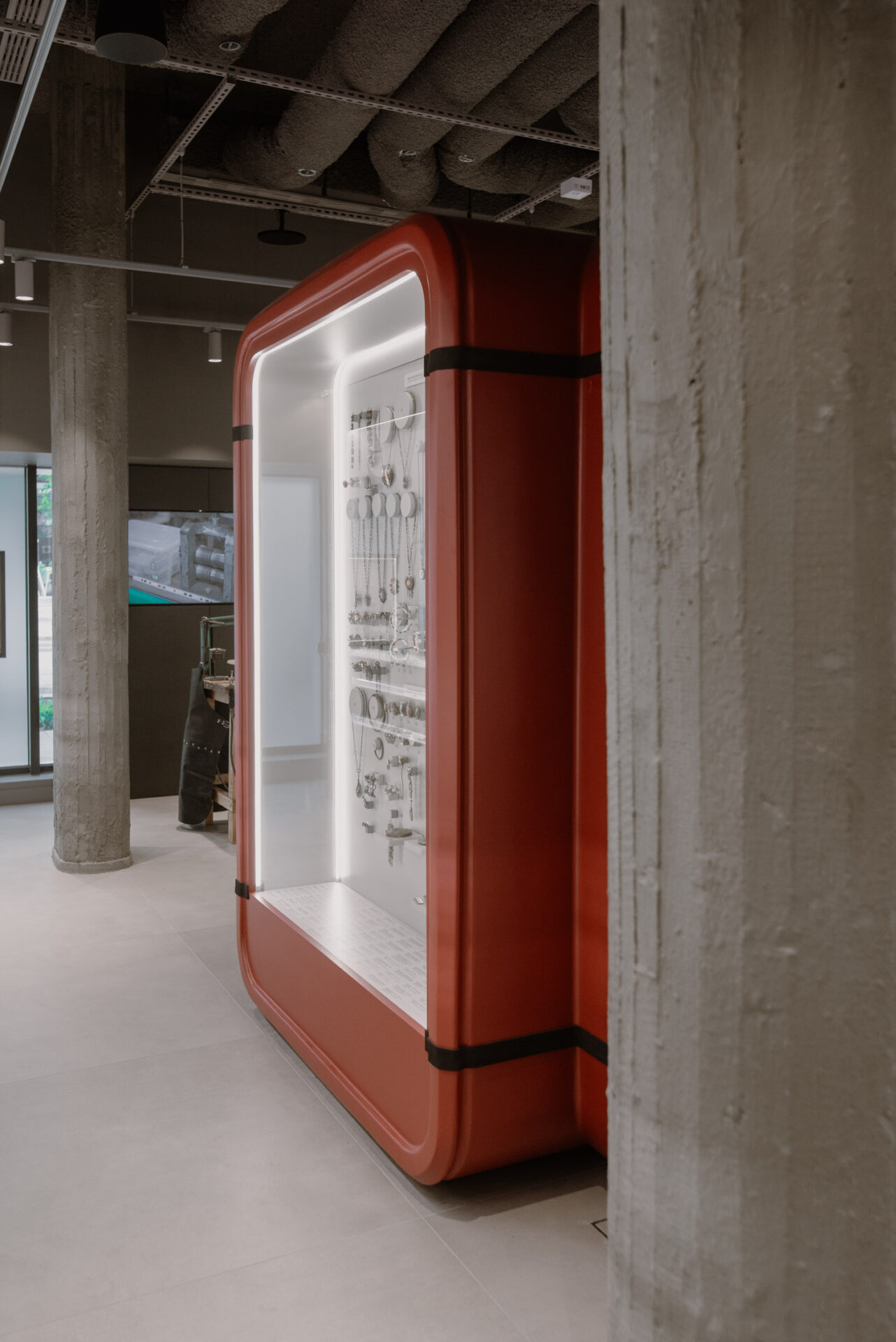
The most recognizable element of the museum is the restored K67 kiosk. This red, rounded, almost pop-cultural object was introduced into the interior as a self-contained time capsule. It houses the PRL-era jewelry collection.
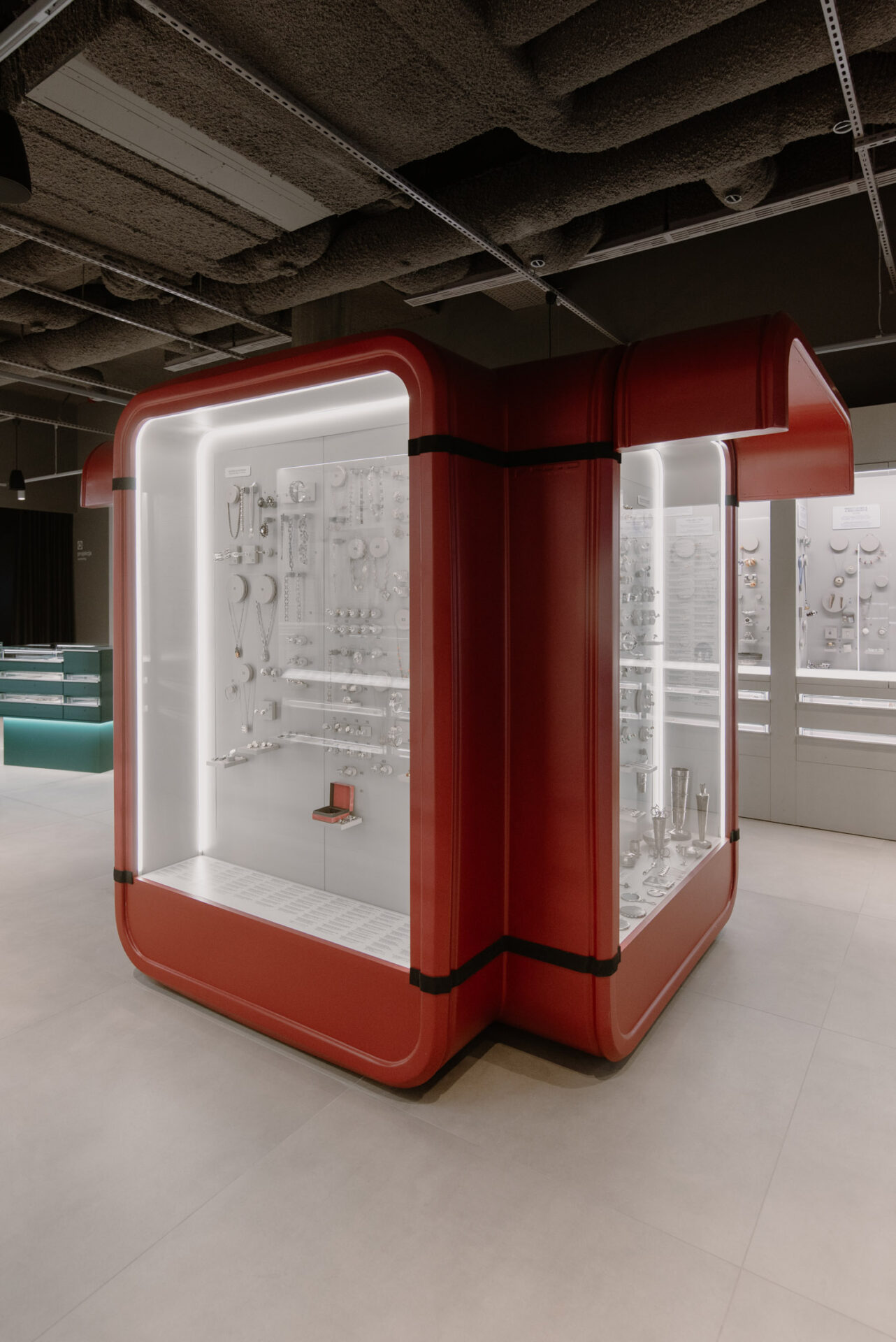
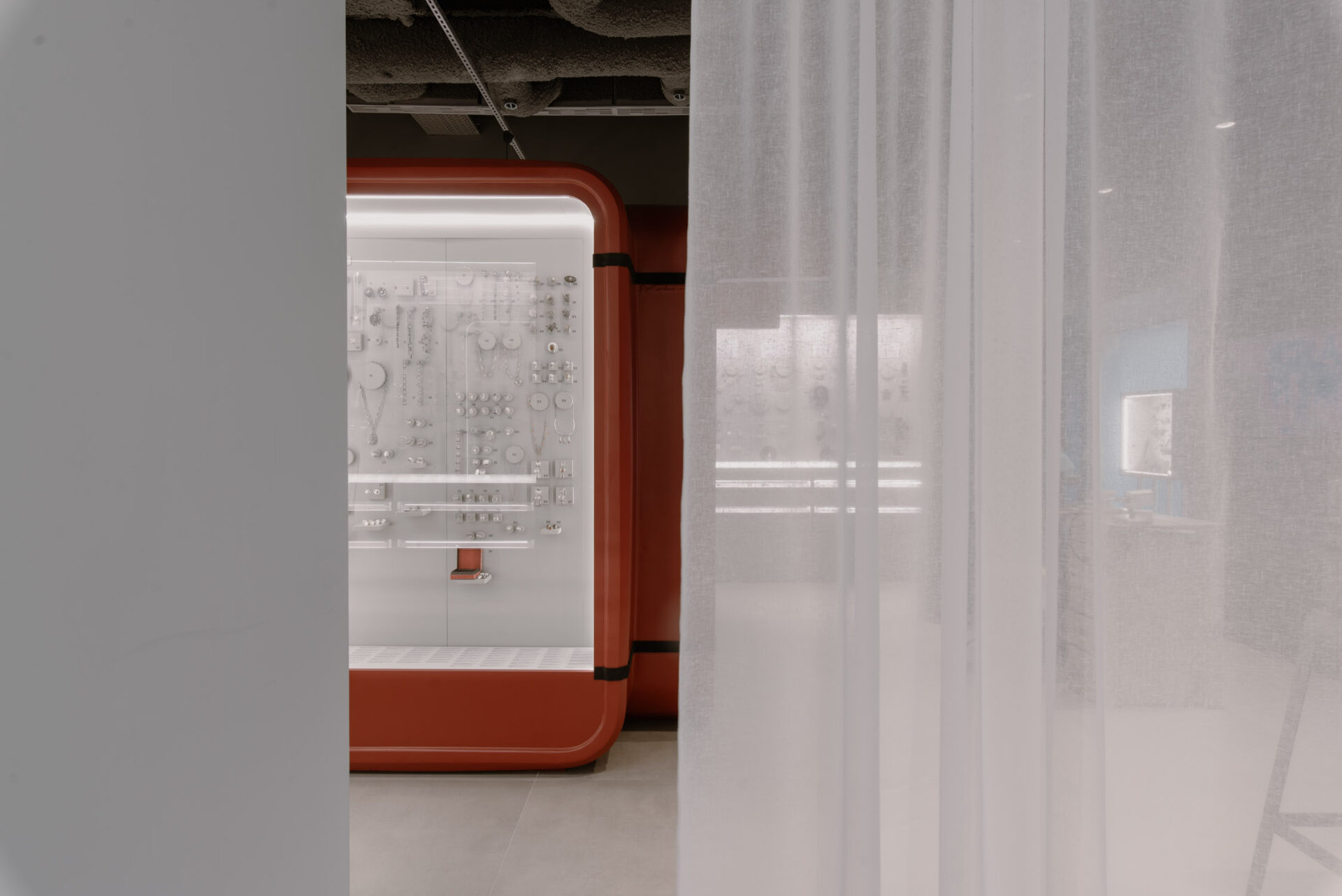
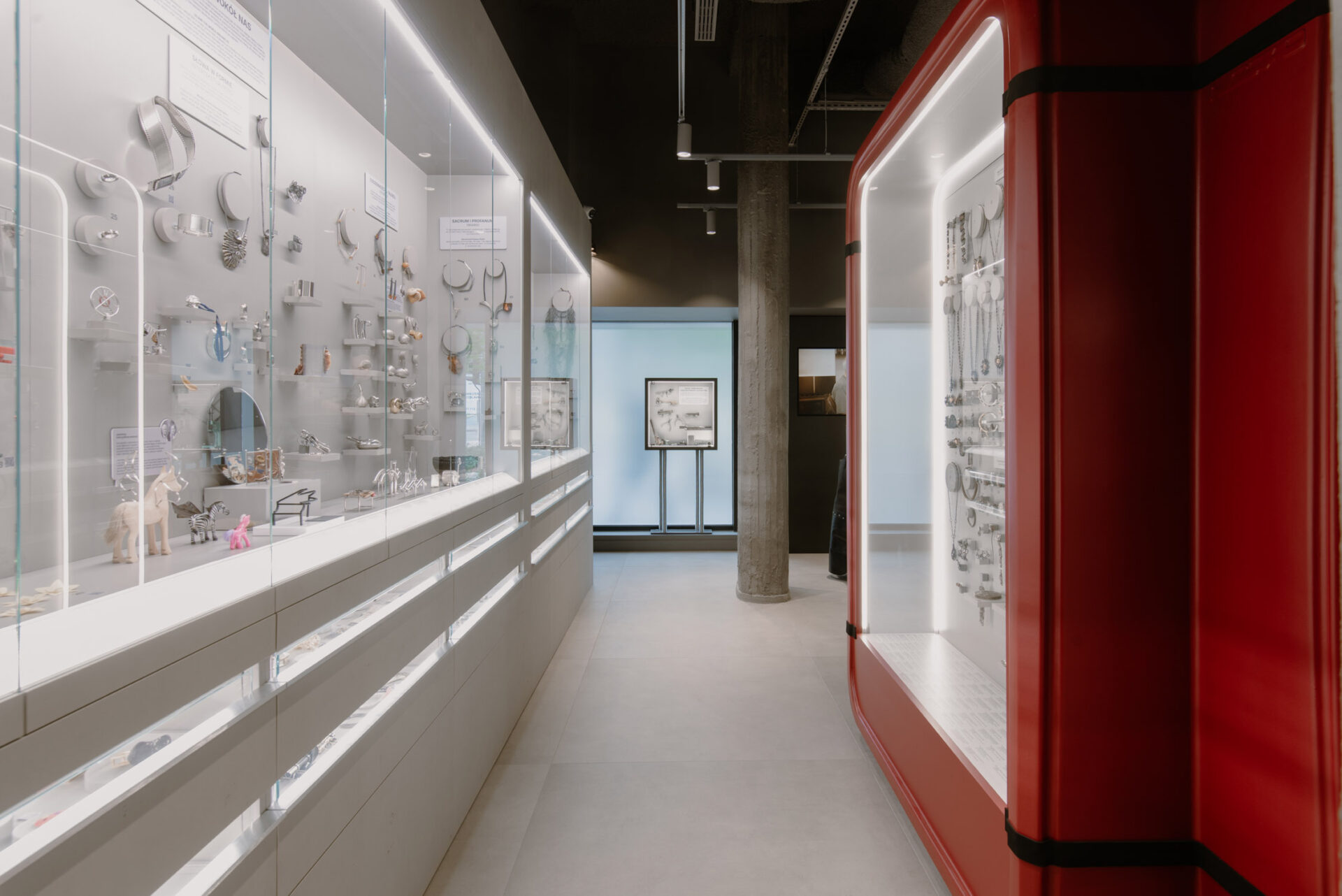
The gesture is visually strong, but far from arbitrary. The kiosk immediately establishes historical context, evoking urban everyday life, commerce, repetition, and the realities of design within the communist period – a world shaped by limitations, craftsmanship, and ingenuity. Rather than placing the jewelry in neutral display cases, the architects embedded it within an environment that reinforces its cultural background.
The red kiosk contrasts sharply with the gray tones of the museum and the exposed technical ceiling, making it a key orientation point within the exhibition. It exists simultaneously as museum object, scenographic element, furniture piece, and architectural commentary. It is one of those elements visitors remember instantly.
Workshop: The Final Chapter
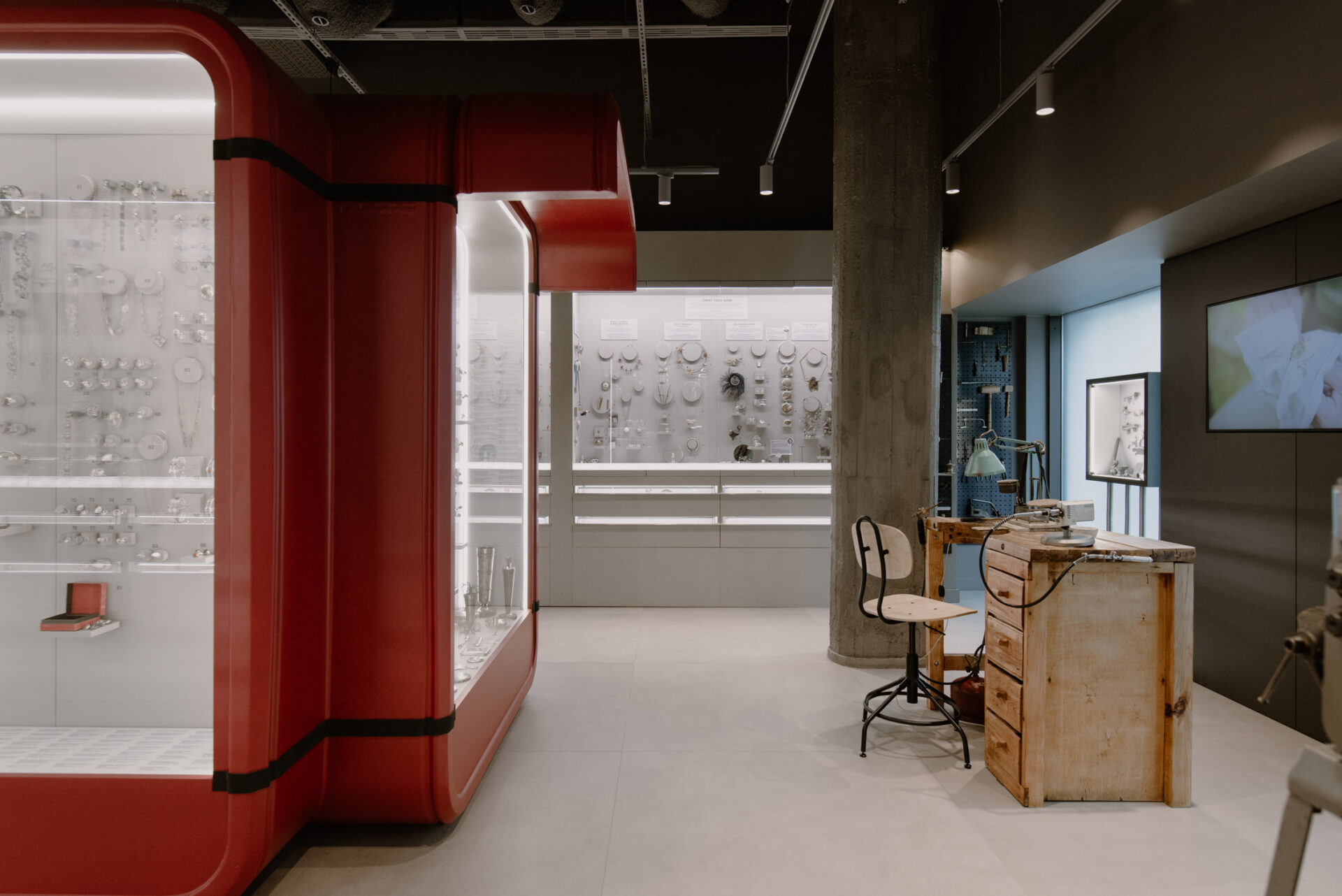
The final stop within the museum is the goldsmith’s workshop. Here, visitors encounter an authentic jeweler’s workbench, tools, and the atmosphere of a place where jewelry ceases to exist merely as a finished object and returns to the process of cutting, soldering, polishing, correcting, experimenting, and refining.
This conclusion is important because after passing through showcases, narratives, and historical contexts, visitors encounter the act of making itself – the relationship between hand, material, and time. Workshops organized within this space allow the museum not only to present finished works, but also to reveal the labor and decisions hidden behind small-scale objects.
Architecture in Service of the Collection. The greatest challenge of the project was scale – not the physical scale of the interior, but the scale of the collection and the number of stories that needed to be organized. More than 2,500 objects, multiple eras, continents, and approaches to jewelry could easily have resulted in an overwhelming environment. mode:linaTM architects chose a different path: architecture as a system of clear and readable chapters.
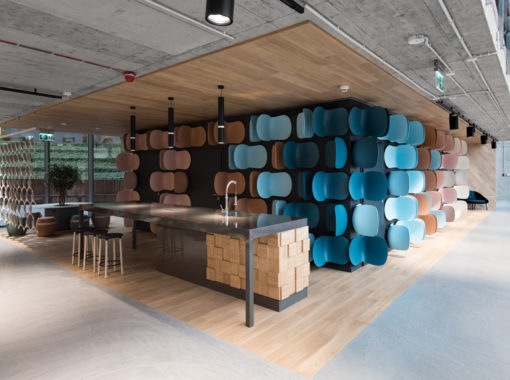
Each zone has its own identity while remaining part of a coherent whole. Exposed technical ceilings, concrete columns, precise lighting lines, and consistently designed showcases create a contemporary museum backdrop. Against this framework, stronger gestures appear: the bamboo cube, corten-inspired surfaces, steel display systems, the red K67 kiosk, wooden showcases, and circular mirrors.
MoJA is not a museum that hides architecture. Yet it is equally not an interior attempting to overshadow its exhibits. Its strength lies in balance. Architecture establishes rhythm, guides visitors, and changes the pace of viewing. At times it encourages concentration, at others surprise; sometimes it creates a stage, and sometimes it disappears entirely, leaving space for the jewelry itself.
The project demonstrates that a museum dedicated to craftsmanship and small-scale objects can achieve an international standard not through excess, but through precision, consistency, and deep understanding of the subject matter. At MoJA, jewelry is not an accessory to the story. It is its primary language – and architecture helps visitors read it
WSPARCIE I MECENAT
Michał Kwiatkiewicz
Tomasz Kwiatkiewicz
Maciej Łączkowiak
KONCEPCJA I ZARZĄDZANIE
Ilona Rosiak-Łukaszewicz,
dyrektor Muzeum Biżuterii MoJA koordynacja projektu i koncepcja merytoryczna
ZESPÓŁ MUZEUM MOJA:
Iga Pluszczewicz Magdalena Wegner Martyna Kołatek
Patrycja Arentowicz
kreatywne partnerstwo i codzienny trud współtworzenia wizji
Agnieszka Serbińska, Karolina Kawczyńska
koncepcja wystawiennicza i aranżacja zbiorów
Joanna Pyda
współpraca w zakresie estetyki i funkcjonalności przestrzeni
WSPARCIE PROJEKTOWE
Łukasz Sobierajski
projektant branży elektrycznej
Tymoteusz Zgrabka
wsparcie w uzgodnieniach
YOS Karol Pawełek
projekt i realizacja informacji kierunkowej oraz komunikacji wizualnej
iComfort
realizacja systemów multimedialnych, nagłośnienia i inteligentnego sterowania oświetleniem
Kluś
dostarczenie profesjonalnych systemów oświetleniowych
REALIZACJA TECHNICZNA I ADMINISTRACJA
Aleksandra Mielcarzewicz, Przemysław Wojciechowski
nadzór techniczny i administracyjny
Jacek Sokołowski, Katarzyna Zakrzewska
opieka prawna nad projektem
MR development
prace budowlano-remontowe
StolBek Bekasiak
realizacja zabudowy meblowej
Krzysztof Drajeraczak wraz z zespołem
prace elektryczne i instalacyjne
KURATELA I EKSPERTYZA NAUKOWA
Joanna Minksztim
opracowanie merytoryczne biżuterii z krajów takich jak: Peru, Boliwia, Papua Nowa Gwinea, Indonezja, Sumatra
Urszula Baszczyńska-Gosz
opracowanie merytoryczne biżuterii z krajów takich jak: Ekwador, Meksyk, Chiny, Wietnam, Tanzania
Julia Fil
opracowanie merytoryczne biżuterii z krajów takich jak: Tybet, Nepal, Indie, Sri Lanka, Nagaland, Tajlandia
Karolina Krzywicka
opracowanie merytoryczne biżuterii z krajów takich jak: Maroko, Algieria, Niger, Mali, Etiopia, Namibia, Kenia, Kamerun, Wybrzeże Kości Słoniowej, Ghana, Sudan, Bliski Wschód, Arabia Saudyjska, Półwysep arabski, Jemen, Oman, Uzbekistan, Tadżykistan, Turkmenistan, Afganistan
Michał Myśliński
wybór kuratorski i opracowanie merytoryczne polskiej biżuterii lat 1945–1990
Marek Nowaczyk, Mariusz Pajączkowski, Krzysztof Ginko
merytoryczny wkład w organizację i odtworzenie pracowni mistrza
PODZIĘKOWANIA IMIENNE
Izabela Pierzchała
Adriana N’Diaye
Alicja Iwańska
Miłosz Łatosi
Piotr Maciejewski
Piotr Walichnowski
Anna Kaczmarek
Justyna Lach
Kinga Dobrowolska-Baczkun
Katarzyna Bukowska
Zbigniew Pyda
Paula Jagielska
Paweł Szymczak
Sławomir Włodarczak
Klaudiusz Napierała
Leszek Muszyński
Jacek Mrowiński